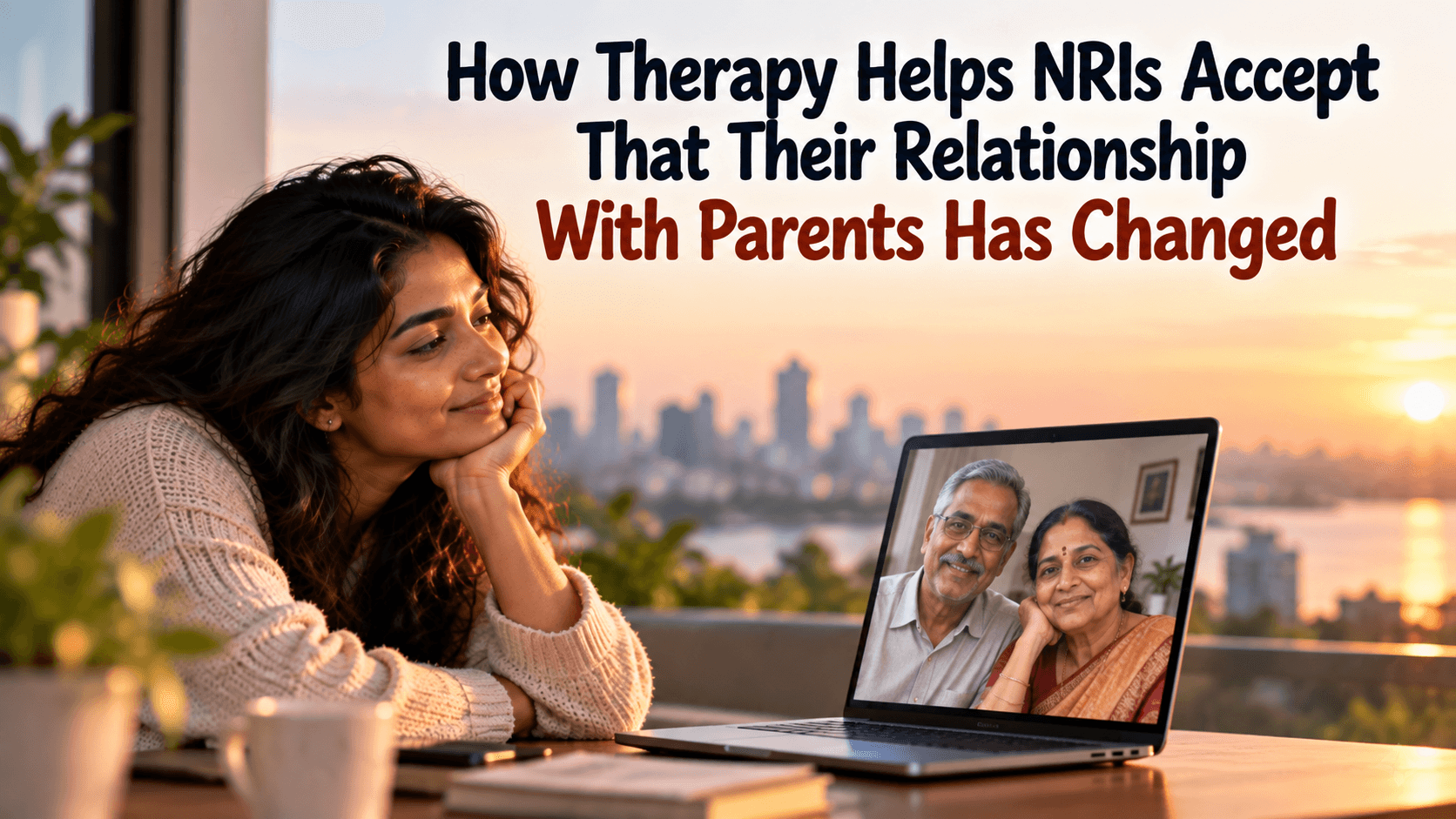
How Therapy Helps NRIs Accept That Their Relationship With Parents Has Changed
How Therapy Helps NRIs Accept That Their Relationship With Parents Has Changed
Focus: Adulthood, distance, aging parents, acceptance
Moving abroad can change your relationship with your parents in ways you may not notice immediately. At first, the distance may feel practical. You call when you can, visit when possible, and continue sharing important parts of life. But over the years, both you and your parents change. You become more independent, they grow older, routines shift, and the relationship that once felt automatic may begin to feel different.
At India Therapist, many NRIs come to therapy because they feel confused by this change. They may still love their parents deeply but feel less emotionally connected, more responsible for them, or unsure how to relate to them as adults. Therapy can help you understand that a changing relationship does not mean a weaker relationship. Sometimes it simply means both you and your parents are moving into a new stage of life.
Why Your Relationship With Parents Changes After Moving Abroad
When you live close to your parents, connection often happens naturally. You may see each other regularly, share meals, notice small changes in mood, and participate in everyday family life. After moving abroad, much of that connection becomes scheduled through phone calls, video chats, and planned visits.
This can make the relationship feel more formal than it once did. You may know the major updates but miss the small details that used to make you feel close. A therapist in India can help you understand that this change is often part of migration, adulthood, and independence. The bond may still be strong, but the way it is maintained becomes different.
Adulthood Changes the Parent-Child Dynamic
As a child or young adult, your parents may have been deeply involved in your decisions. They may have guided your education, career, relationships, finances, and everyday choices. As you become more independent, especially while living abroad, you may start making decisions without consulting them in the same way.
This transition can feel uncomfortable for both sides. Parents may struggle with having less influence, while you may feel guilty for wanting more independence. Therapy helps you understand that becoming an adult does not mean rejecting your parents. It means the relationship needs to evolve from one based mainly on authority and dependence into one that allows mutual respect and individuality.
Distance Can Create Emotional Gaps
Physical distance can slowly create emotional distance if the relationship is not intentionally maintained. Time zones, work schedules, family responsibilities, and daily stress can make conversations shorter or less frequent.
You may begin to notice that your parents know less about your everyday life, while you know less about theirs. They may stop telling you small problems because they do not want to worry you. You may also avoid sharing your own struggles because you do not want them to feel helpless from far away.
An Indian therapist online can help you recognize these patterns and explore healthier ways to stay emotionally connected without feeling pressure to share everything.
Aging Parents Can Change the Relationship Again
As parents age, the emotional dynamic can shift significantly. The people who once cared for you may begin needing more support themselves. You may notice changes in their health, energy, confidence, or independence.
This can be difficult for NRIs because you may feel that you are watching these changes from a distance. A parent may mention a hospital visit casually, or you may notice during a visit that they walk more slowly than before. These moments can trigger sadness, anxiety, and guilt.
Therapy can help you process the reality that your parents are aging without turning every sign of change into fear. It can also help you think more clearly about what kind of support is realistic from abroad.
Guilt Can Make You Want the Old Relationship Back
You may miss the time when your parents felt stronger, younger, and more involved in your daily life. That nostalgia can create a desire to recreate the old relationship whenever you visit India.
But the relationship has changed because everyone involved has changed. You are not the same person who left, and your parents are not exactly the same either.
Trying to force the relationship back into its old form can create disappointment. Therapy helps you grieve what has changed while becoming curious about what the relationship can become now.
Parents May Also Be Learning How to Relate to the Adult You
It is easy to focus only on how difficult the transition feels for you, but your parents may also be adjusting. They may still remember you as the child who needed their guidance, even though you now manage your own career, relationships, finances, and life abroad.
This can sometimes create conflict. They may give advice you no longer want, question decisions you already made, or struggle when you set boundaries.
Therapy in India can help you respond with greater clarity. You can respect your parents' concern without returning to a role where they make every decision for you. Healthy adult relationships require space for disagreement as well as connection.
Visits Home Can Make These Changes More Visible
India visits can make the changing relationship especially obvious. You may imagine returning home and immediately feeling like the person you were before moving abroad. Instead, you may find that routines have changed and your parents have learned to live without your daily presence.
They may have their own schedules, friendships, medical routines, religious activities, or social commitments. You may feel surprisingly hurt when they do not organize their entire day around your visit.
Therapy helps you understand that their independence is not rejection. In many ways, it may be a healthy adaptation to the distance. Your relationship may now require intentional time together instead of the automatic closeness you once had.
Family Roles May Shift Toward Caregiving
As parents age, you may begin taking on more responsibility for medical decisions, finances, travel, insurance, or household needs. This role reversal can feel emotionally complicated.
Part of you may still want your parents to be the people you turn to for reassurance, while another part realizes that they increasingly depend on you. You may feel grief about this change even while accepting it.
Therapy provides space to talk about that grief. Becoming more responsible for your parents does not mean you must become emotionally strong every moment. You are allowed to feel sadness about the changing roles while still supporting them.
How Therapy Helps You Accept the New Relationship
Therapy helps you move away from comparing your relationship with your parents to how it used to be. Instead, you can begin asking what connection looks like in this stage of life.
You may decide to have more intentional calls instead of frequent rushed conversations. You may ask your parents more about their everyday life rather than only discussing health or practical problems. You may create new traditions around visits and learn to communicate boundaries more respectfully.
Therapy can help you process guilt, manage aging-parent anxiety, understand changing family roles, strengthen communication, and build a relationship based on the present rather than constantly trying to recreate the past.
At India Therapist, culturally sensitive therapists in India and Indian therapists online can support NRIs navigating adulthood, family distance, aging parents, guilt, and changing relationships with parents.
Acceptance Does Not Mean Becoming Less Connected
Accepting that the relationship has changed does not mean giving up on closeness. In fact, acceptance can make connection more meaningful because you stop expecting the relationship to look exactly as it did before.
You may begin appreciating different kinds of conversations. You may become more interested in your parents' experiences, memories, and perspectives. They may slowly begin seeing you as an adult rather than only as their child.
The relationship can become different without becoming less important.
You Can Build a New Kind of Closeness
Relationships with parents continue evolving throughout life. Childhood closeness may become adult friendship. Dependence may become mutual support. Advice may become conversation. Physical proximity may become intentional emotional connection across countries.
This transition can contain grief because something familiar is ending. But it can also create an opportunity to know your parents in a deeper way—as people with their own fears, regrets, hopes, and stories.
Therapy can help you make space for both realities: missing what the relationship used to be and appreciating what it can still become.
Therapy helps you move from “My relationship with my parents is not what it used to be” to “Our relationship is changing, and I can still create meaningful connection in this new stage of life.”
Ready to talk to someone who understands?
Connect with an Indian therapist who speaks your language and understands your cultural context.