Blog
Expert insights on NRI mental health, cultural identity, relationships, and therapy guidance from our clinical team.

How Therapy Helps You Stop Feeling Guilty for Enjoying Life After Divorce
Feeling guilty for enjoying life after divorce is a common form of recovery guilt. You may worry that happiness means the marriage did not matter, that you are moving on too quickly, or that others will judge you. Therapy helps you process grief, reduce guilt, rebuild identity, and give yourself permission to experience joy again. With support from India Therapist, a therapist in India, or an Indian therapist online, recovery can include both honoring the past and enjoying the life you are creating now.

How Therapy Helps You Stop Mistaking Familiar Pain for Love
People sometimes mistake familiar emotional pain for love because attachment wounds and earlier relationship experiences can make inconsistency, emotional distance, or unpredictability feel normal. Therapy helps you recognize repeated relationship patterns, understand attachment triggers, build self-worth, and learn what emotional safety actually feels like. With support from India Therapist, a therapist in India, or an Indian therapist online, you can gradually build relationships where love feels safe rather than painful.
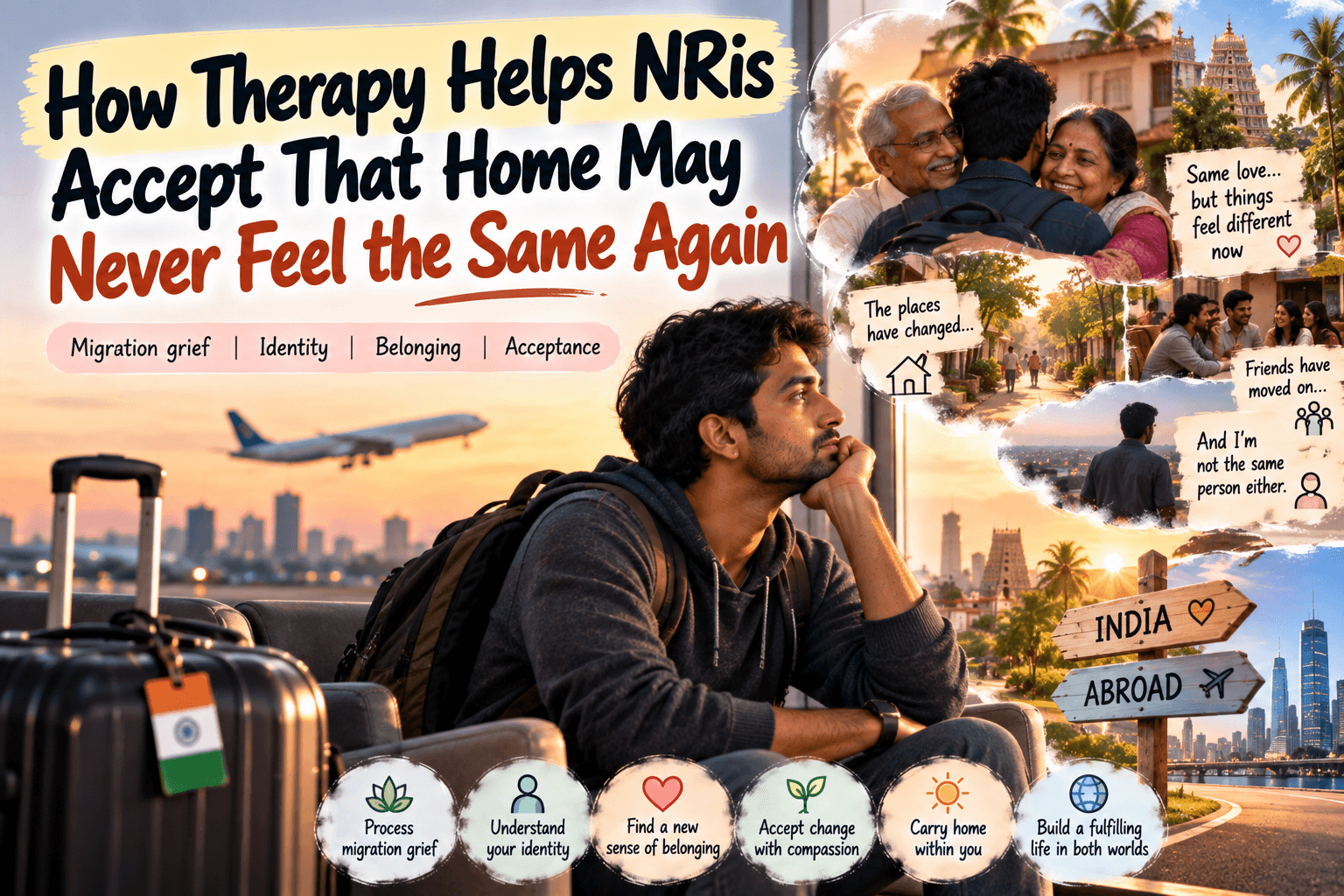
How Therapy Helps NRIs Accept That Home May Never Feel the Same Again
NRIs may experience migration grief when returning to India and realizing that home no longer feels exactly as they remember it. Family routines change, friendships evolve, neighborhoods transform, and living abroad reshapes identity. Therapy helps NRIs process grief, reduce guilt, accept changing relationships, and create a broader sense of belonging that can include both India and life abroad.

How Therapy Helps You Trust Yourself After Years of Being Second-Guessed
Years of being second-guessed can create chronic self-doubt, emotional invalidation, reassurance-seeking, and difficulty making decisions. Therapy helps you understand where these patterns began, separate other people’s voices from your own, rebuild confidence, strengthen boundaries, and trust yourself even when others disagree. With support from India Therapist, a therapist in India, or an Indian therapist online, self-trust can gradually become part of your life again.
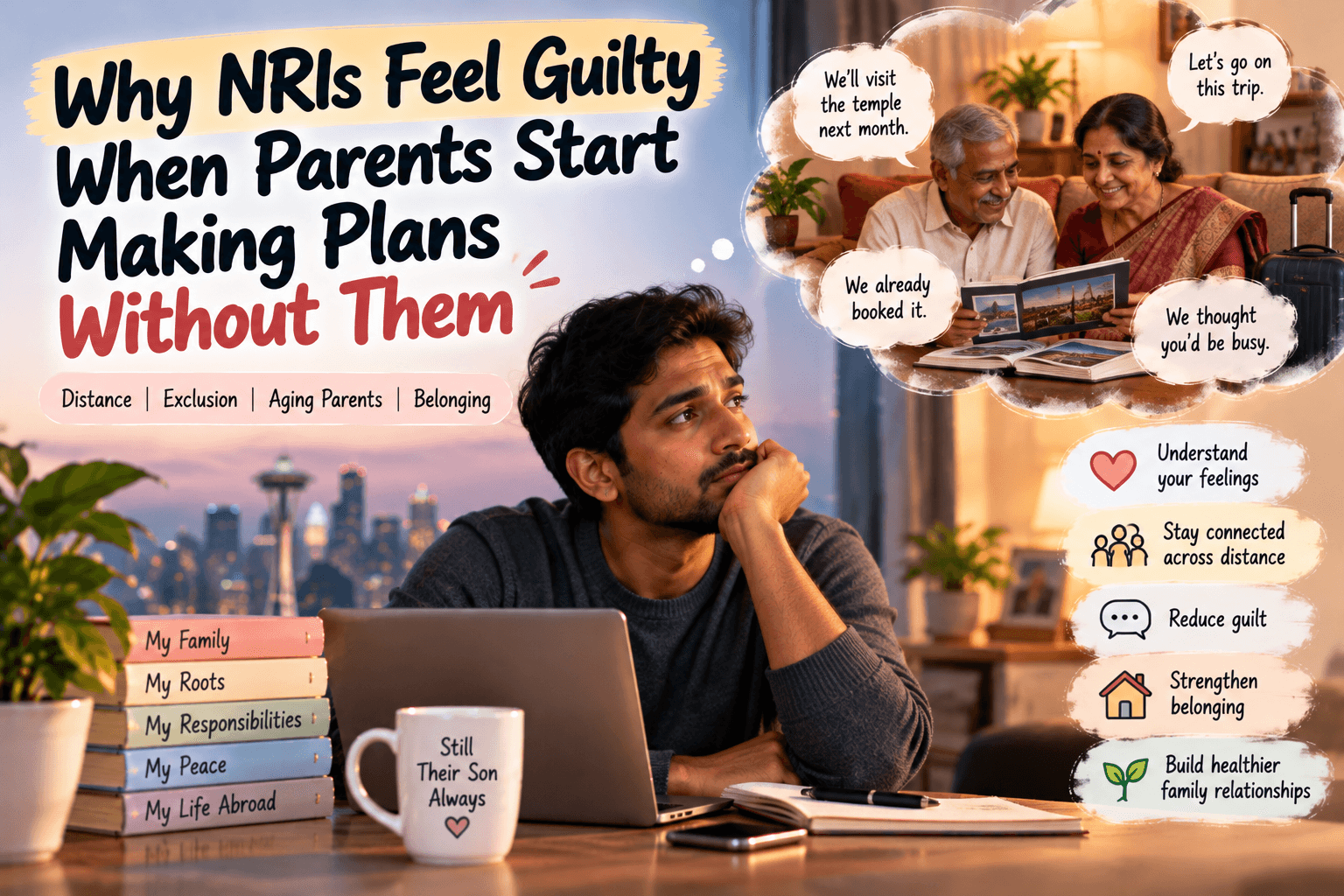
Why NRIs Feel Guilty When Parents Start Making Plans Without Them
NRIs can feel deeply hurt when parents begin making plans without them because it can trigger guilt, exclusion, fear of being replaced, and grief about changing family roles. As parents age and siblings take on more responsibilities, distance can make belonging feel uncertain. Therapy helps NRIs process these emotions, communicate more openly with family, reduce guilt, and build a healthier sense of connection across distance.

How Therapy Helps You Stop Feeling Guilty for Needing More From a Relationship
Feeling guilty for needing more in a relationship often comes from low self-worth, fear of conflict, emotional invalidation, and cultural beliefs about adjustment. Therapy helps you identify unmet needs, communicate more clearly, strengthen self-worth, and understand whether the relationship has space for mutual care. With support from India Therapist, a therapist in India, or an Indian therapist online, you can stop treating your emotional needs like a burden.

The Hidden Grief of Realizing You Stayed Too Long
Realizing that you stayed too long in a difficult relationship can create grief, regret, anger, and intense self-blame. People often stay because of attachment, hope, fear, family pressure, financial concerns, or uncertainty about what comes next. Therapy helps you understand those choices with compassion, process the losses, rebuild self-trust, and use the experience to create healthier boundaries and relationships in the future.

How Therapy Helps You Stop Living Around Other People’s Reactions
Living around other people’s reactions often comes from people-pleasing, anxiety, fear of conflict, and family conditioning. Therapy helps you understand why approval feels so important, strengthen boundaries, reduce guilt, tolerate other people’s disappointment, and make decisions based on your own values. With support from India Therapist, a therapist in India, or an Indian therapist online, you can care about others without allowing their reactions to control your life.

The Pain of Realizing You Were Always the One Holding the Relationship Together
Realizing that you were always the one holding a relationship together can create resentment, grief, emotional exhaustion, and self-doubt. Over-functioning often happens when one person takes responsibility for communication, emotional repair, planning, and keeping the relationship stable. Therapy helps you recognize these patterns, process emotional neglect, strengthen boundaries, rebuild self-worth, and understand what mutual effort looks like in a healthy relationship.

Why You Feel Guilty When You Stop Being the Strong One
Feeling guilty when you stop being the strong one often comes from emotional responsibility, family pressure, self-worth tied to usefulness, and fear of burdening others. Therapy helps you recognize emotional exhaustion, become more comfortable with vulnerability, ask for support, set healthier boundaries, and understand that strength does not require constant self-sacrifice.

How Therapy Helps You Stop Waiting for an Apology That May Never Come
Waiting for an apology can keep you emotionally connected to someone who hurt you, especially when you believe their acknowledgment is necessary for closure. Therapy helps you process resentment, validate your own experience, accept what cannot be changed, strengthen boundaries, and create your own sense of closure. With support from India Therapist, a therapist in India, or an Indian therapist online, healing can begin even when the apology never comes.

How Therapy Helps You Stop Confusing Responsibility With Self-Sacrifice
Many people confuse responsibility with self-sacrifice because of family pressure, guilt, people-pleasing, and the belief that being needed gives them value. Therapy helps you understand where your responsibility ends, build healthier boundaries, reduce emotional exhaustion, and strengthen self-worth. With support from India Therapist, a therapist in India, or an Indian therapist online, you can care for others without losing yourself.

The Grief of Realizing Your Marriage Changed Who You Became
A difficult marriage can gradually change your identity, confidence, relationships, and connection to yourself. After divorce, many people experience grief and resentment when they realize how much they changed while trying to maintain the relationship. Therapy helps you process identity loss, understand self-abandonment, rebuild boundaries and self-worth, and rediscover who you are beyond the marriage.

How Therapy Helps You Rebuild a Sense of Home After Divorce
Divorce can make home feel empty, unfamiliar, or emotionally unsafe because relationships often become deeply connected to identity, routine, and belonging. Therapy helps you process grief, understand loneliness, rebuild identity, create new routines, and develop a stronger sense of emotional safety. With support from India Therapist, a therapist in India, or an Indian therapist online, you can slowly create a sense of home that is based on who you are becoming, not only on what you lost.

How Therapy Helps You Stop Feeling Guilty for Outgrowing a Relationship
Outgrowing a relationship can create guilt, confusion, and fear, especially when there is still love or attachment. Therapy helps you understand how your needs have changed, separate guilt from responsibility, recognize attachment patterns, communicate honestly, and accept that personal growth can sometimes change relationships. With support from India Therapist, a therapist in India, or an Indian therapist online, you can move forward with clarity, self-compassion, and respect for both yourself and the relationship.
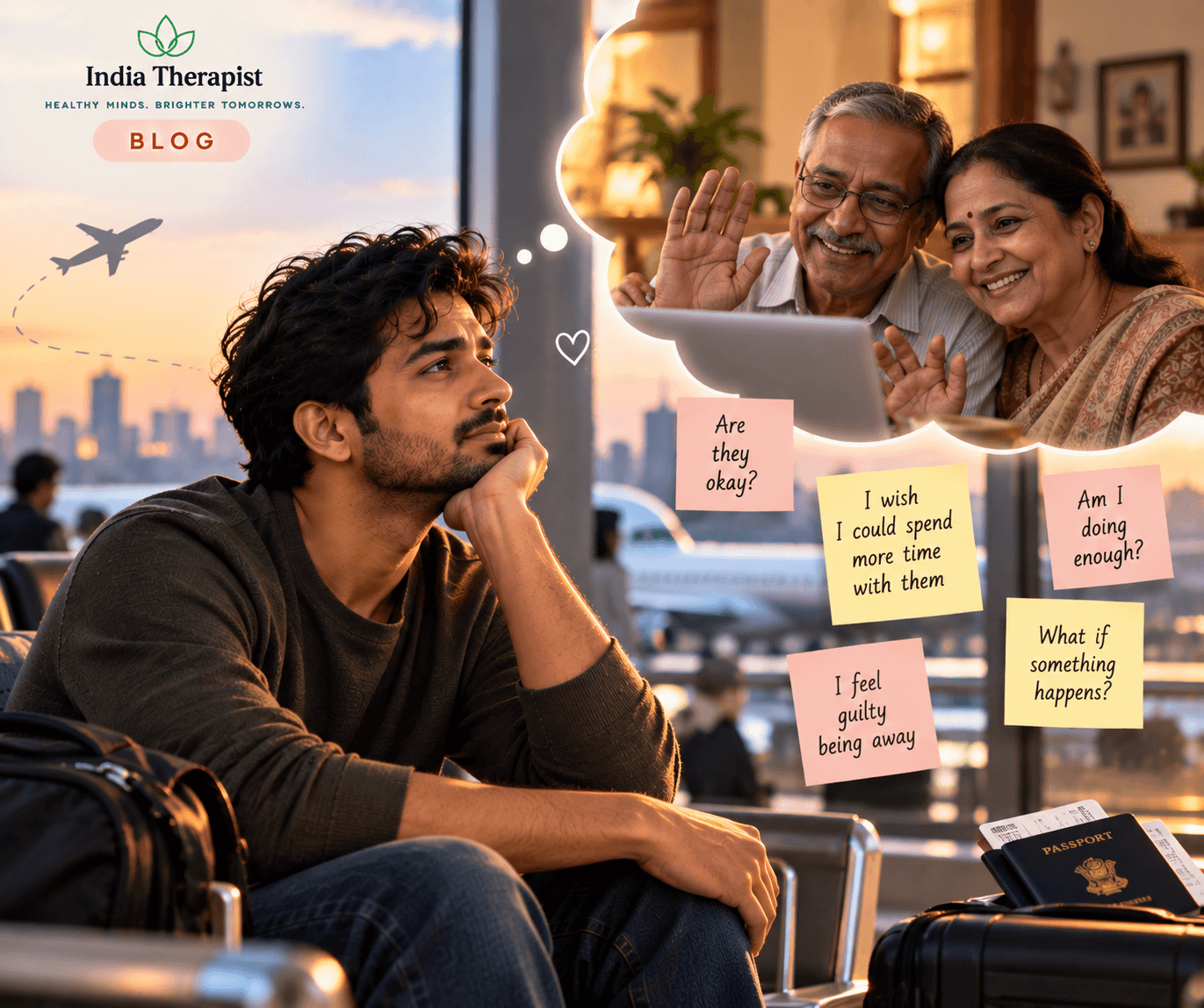
Why NRIs Feel Anxious About How Little Time They Have With Parents
Many NRIs become increasingly anxious as their parents age because physical distance can make time together feel painfully limited. This can create anticipatory grief, guilt, fear of family emergencies, and pressure to make every India visit meaningful. Therapy helps NRIs understand these emotions, separate love from excessive guilt, plan realistically for aging-parent needs, and stay emotionally present with their parents instead of constantly grieving the future.
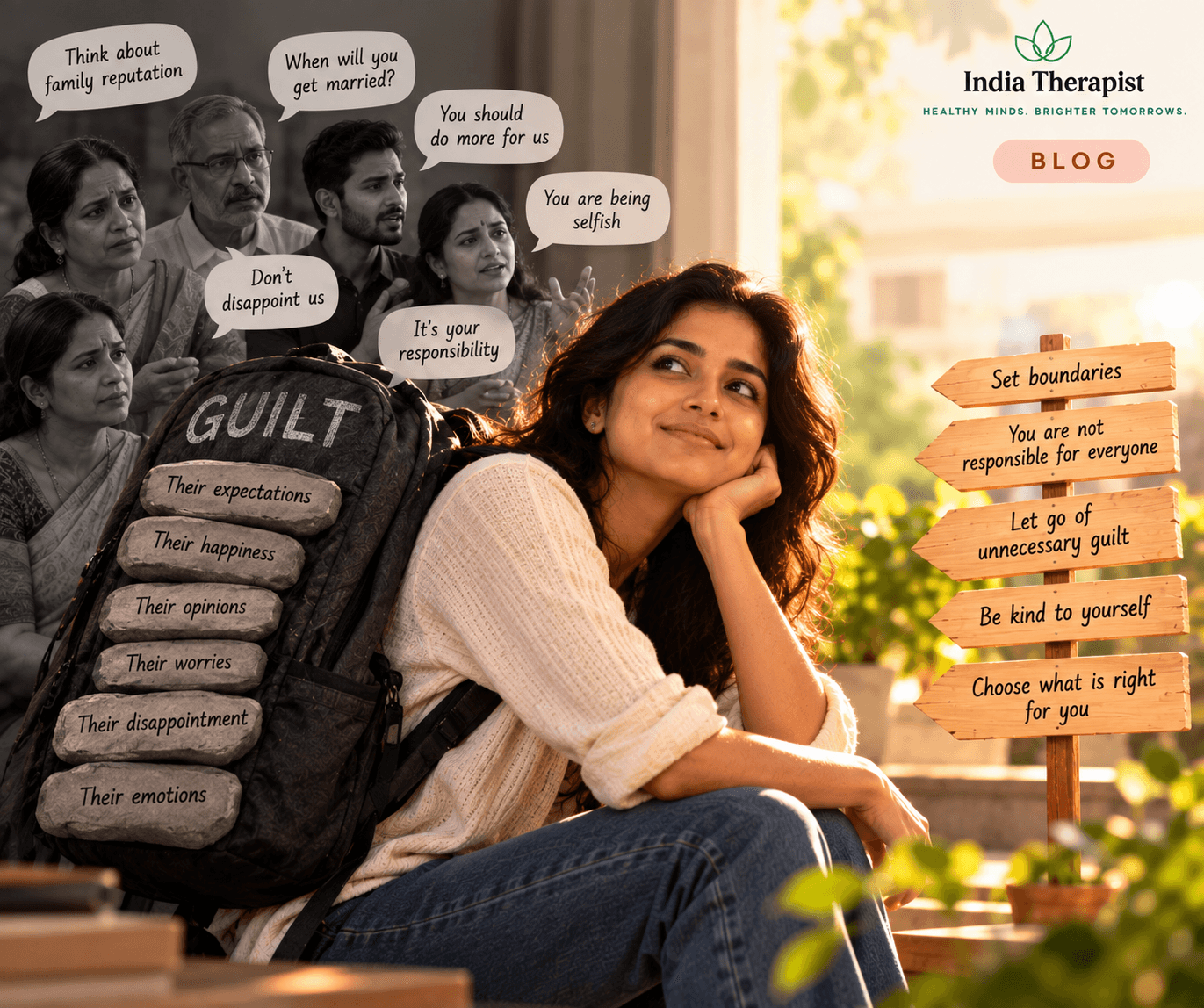
How Therapy Helps You Stop Carrying Guilt That Is Not Yours
Carrying guilt that is not yours often comes from family pressure, people-pleasing, emotional responsibility, and difficulty setting boundaries. Therapy helps you distinguish real responsibility from false guilt, understand when other people’s emotions are not yours to fix, strengthen boundaries, and develop self-compassion. With support from India Therapist, a therapist in India, or an Indian therapist online, you can care for others without carrying their emotional burden.

How Therapy Helps You Stop Feeling Like You Have to Earn Love
Feeling like you must earn love often comes from attachment wounds, conditional approval, people-pleasing, and low self-worth. This pattern can lead to overgiving, fear of rejection, weak boundaries, and emotionally one-sided relationships. Therapy helps you understand where these beliefs began, rebuild self-worth, develop healthier boundaries, and become more comfortable receiving love without constantly proving yourself.

Why NRIs Feel Pressure to Make Every India Visit Perfect
NRIs often feel intense pressure to make every India visit perfect because parents, relatives, friends, and family responsibilities compete for limited time. This can create guilt, overcommitment, emotional exhaustion, and the feeling that no amount of time is enough. Therapy helps NRIs set realistic expectations, establish healthier boundaries, prioritize meaningful connection, and enjoy family visits without trying to satisfy everyone.

How Therapy Helps You Stop Feeling Like You Wasted Years in a Marriage
Feeling like you wasted years in a marriage can create regret, grief, shame, and intense self-blame after divorce. Therapy helps you understand why you stayed, process the loss of time without punishing yourself, recognize what you learned, rebuild self-worth, and create a future without feeling pressured to “catch up.” With support from India Therapist, a therapist in India, or an Indian therapist online, the past can become part of your story without controlling what comes next.

Why Divorce Can Make You Afraid to Trust Your Own Feelings
Divorce can make people question their own emotions, instincts, and judgment, especially when the marriage involved criticism, emotional invalidation, betrayal, or repeated self-doubt. Therapy helps you understand mixed emotions, separate present feelings from past fear, rebuild confidence in your decisions, and strengthen self-trust. With support from India Therapist, a therapist in India, or an Indian therapist online, you can reconnect with your emotional voice and rebuild your life with greater clarity.

Why You Feel Guilty for Feeling Better After a Painful Chapter Ends
Feeling guilty for recovering after a painful chapter is common, especially after divorce, grief, heartbreak, family conflict, or long-term stress. Healing guilt can come from loyalty to the past, fear of judgment, unresolved grief, or the belief that happiness means the pain did not matter. Therapy helps you process grief, practice self-compassion, give yourself permission to feel better, and move forward without erasing what happened.

The Pain of Losing Mutual Friends After Divorce
Losing mutual friends after divorce can create social grief, loneliness, identity confusion, and shame. Many people expect the marriage loss, but not the emotional pain that comes when shared friendships become distant or disappear. Therapy helps you process that grief, understand the impact on your confidence and belonging, rebuild social connection, and create a healthier support system. With support from India Therapist, a therapist in India, or an Indian therapist online, healing becomes less about replacing what was lost and more about rebuilding meaningful connection.

How Therapy Helps You Stop Feeling Ashamed of Starting Over
Starting over after divorce can bring shame, identity confusion, comparison, and low self-worth. Many people feel embarrassed that life did not go according to plan, especially when family or society places pressure on marriage and stability. Therapy helps you understand the emotional story behind that shame, rebuild confidence, reconnect with identity, and see starting over as a form of courage rather than failure. With support from India Therapist, a therapist in India, or an Indian therapist online, healing becomes a process of rebuilding with compassion.

Why You Struggle to Trust Calm Relationships
Many people struggle to trust calm relationships because past attachment wounds taught them that love is unpredictable, intense, or emotionally unsafe. As a result, peace can feel unfamiliar, boring, or suspicious. Therapy helps people understand attachment patterns, rebuild self-trust, recognize emotional safety, and slowly feel more comfortable in healthy love. With support from India Therapist, a therapist in India, or an Indian therapist online, calm relationships can begin to feel safe instead of unsettling.

Why Divorce Can Make You Fear Being Judged Everywhere You Go
Divorce can create fear of judgment, shame, social anxiety, and loss of confidence, especially when family and cultural expectations make the experience feel public. Therapy helps you challenge shame, rebuild self-worth, set boundaries around intrusive questions, and feel more comfortable in social situations again. With support from India Therapist, a therapist in India, or an Indian therapist online, you can stop allowing divorce stigma to define your identity.

How Therapy Helps You Stop Living in Constant Emotional Alert
Constant emotional alertness can develop when prolonged stress, unpredictable relationships, anxiety, or past experiences teach the mind to constantly scan for danger. Therapy helps you recognize triggers, regulate emotions, understand hypervigilance, strengthen boundaries, and gradually feel safer during calm moments. With support from India Therapist, a therapist in India, or an Indian therapist online, you can move from constantly anticipating problems toward greater emotional balance and wellbeing.

How Therapy Helps You Stop Punishing Yourself for Past Mistakes
Past mistakes can create long-lasting guilt, shame, self-criticism, and difficulty forgiving yourself. Therapy helps you distinguish healthy responsibility from emotional self-punishment, understand the context of past decisions, develop self-compassion, make amends where appropriate, and rebuild self-worth. With support from India Therapist, a therapist in India, or an Indian therapist online, you can learn from your past without allowing it to define your future.

Why NRIs Feel Guilty When Their Parents Get Older Without Them Nearby
Many NRIs feel guilty as their parents grow older in India because distance can create helplessness, grief, and pressure around family responsibility. Watching parents age through video calls, missing everyday moments, relying on siblings, and worrying during health emergencies can make guilt especially intense. Therapy helps NRIs process aging-parent grief, separate love from self-blame, communicate more openly with family, and create meaningful connection despite distance.

Why You Feel Like You Lost Your Future After Divorce
Divorce can feel like losing an entire future, not just losing a relationship. It often brings grief, uncertainty, identity confusion, and fear about what comes next. Therapy helps people process the emotional loss of the future they imagined, rebuild self-worth, reconnect with identity, and slowly create a new sense of hope. With support from India Therapist, a therapist in India, or an Indian therapist online, healing becomes a process of rebuilding rather than erasing.

The Fear of Making the Same Relationship Mistakes Again
The fear of repeating relationship mistakes often comes from past hurt, attachment wounds, low self-trust, and anxiety about missing warning signs. Therapy helps you understand your patterns, strengthen boundaries, recognize healthy trust, and build greater self-awareness. With support from India Therapist, a therapist in India, or an Indian therapist online, you can learn from your past without allowing it to control your future relationships.

How Therapy Helps You Rebuild Your Social Life After Divorce
Divorce can affect friendships, social confidence, identity, and your sense of belonging. Therapy helps you process loneliness, rebuild confidence, reconnect with supportive friends, create healthier boundaries, and develop new social connections at your own pace. With support from India Therapist, a therapist in India, or an Indian therapist online, you can rebuild a meaningful social life after divorce without feeling pressured to become who you were before.

How Therapy Helps You Stop Feeling Guilty for Choosing Yourself
Feeling guilty for choosing yourself often comes from family expectations, people-pleasing, low self-worth, and the belief that setting boundaries is selfish. Therapy helps you understand the difference between guilt and responsibility, reconnect with your own needs, build healthier boundaries, and make decisions without constantly seeking approval. With support from India Therapist, a therapist in India, or an Indian therapist online, you can care for others without losing yourself.

Why You Feel Lonely Even When Divorce Brought Relief
emotional emptiness. These mixed emotions do not mean the divorce was a mistake. Therapy helps you understand the difference between missing a person and missing companionship, process grief, rebuild identity, strengthen self-worth, and create meaningful connection again. With support from India Therapist, a therapist in India, or an Indian therapist online, you can heal without feeling pressured to choose between relief and sadness.

Why Divorce Can Make You Afraid of Your Own Decisions
Divorce can make people question their judgment, regret past choices, and become afraid of making future decisions. Therapy helps rebuild self-trust by reducing self-blame, understanding old decision-making patterns, strengthening confidence, and learning that good decisions do not require perfect outcomes. With support from India Therapist, a therapist in India, or an Indian therapist online, people can move from fear and regret toward clarity, independence, and confidence.

The Fear of Falling in Love Again After a Painful Marriage
Falling in love again after a painful marriage can bring fear, vulnerability, trust issues, attachment wounds, and anxiety about repeating the past. Therapy helps you process old relationship pain, rebuild trust in yourself, recognize healthy relationship patterns, strengthen boundaries, and approach new relationships with greater emotional safety. With support from India Therapist, a therapist in India, or an Indian therapist online, you can heal at your own pace and learn to connect again without allowing past pain to control your future.

How Therapy Helps You Stop Taking Everything Personally
Taking things personally is often connected to rejection sensitivity, low self-worth, emotional invalidation, people-pleasing, and the habit of feeling responsible for other people’s moods. Therapy helps you separate facts from assumptions, regulate emotional reactions, handle criticism more calmly, and build a stronger sense of self-worth. With support from India Therapist, a therapist in India, or an Indian therapist online, you can develop healthier relationships without interpreting every change, disagreement, or silence as rejection.

How Therapy Helps You Feel Comfortable Being Alone After Divorce
Being alone after divorce can feel uncomfortable because marriage often becomes part of your routine, identity, and emotional world. Therapy helps you understand loneliness, process grief, rebuild independence, rediscover your identity, and become more comfortable with your own company without isolating yourself. With support from India Therapist, a therapist in India, or an Indian therapist online, you can rebuild a meaningful life after divorce at your own pace.

How Therapy Helps You Recognize Unhealthy Relationship Patterns
Unhealthy relationship patterns can repeat because of attachment experiences, childhood dynamics, fear of abandonment, weak boundaries, family expectations, and beliefs about love. Therapy helps you understand why certain relationships feel familiar, recognize emotional triggers and red flags, strengthen boundaries, and build healthier connections without blaming yourself for your past.

How Therapy Helps You Build a New Life Without Erasing Your Past
Starting a new life after divorce or separation does not mean erasing your past. Healing involves accepting what happened, processing grief, rebuilding your identity, developing healthy boundaries, and learning to trust yourself again. Therapy can help you move forward without denying the experiences that shaped you.

How Therapy Helps You Stop Apologizing for Your Feelings
Many people apologize for their feelings because they have experienced emotional invalidation, criticism, or fear of being misunderstood. This can affect confidence, self-expression, relationships, and mental health. This blog explains how therapy helps individuals understand their emotions, stop confusing feelings with fault, rebuild self-worth, and express themselves without guilt. Support from India Therapist, a therapist in India, or an Indian therapist online can help people feel heard and emotionally confident.

The Emotional Burden of Explaining Divorce to Everyone
Explaining divorce to everyone can become emotionally exhausting, especially in Indian families where marriage is deeply connected to family expectations and social identity. This blog explores the emotional burden of answering questions, facing judgment, managing shame, and repeatedly defending a painful decision. Therapy with India Therapist, a therapist in India, or an Indian therapist online can help individuals set boundaries, rebuild self-worth, process grief, and heal after divorce without shame.

How Therapy Helps You Stop Feeling Like Divorce Means Failure
Divorce can feel like failure because of grief, shame, family pressure, cultural expectations, and self-blame. This blog explains how therapy helps individuals process divorce, rebuild self-worth, manage guilt, set boundaries with family, and begin emotional healing. With support from India Therapist, a therapist in India, or an Indian therapist online, people can stop seeing divorce as a personal failure and start rebuilding life with clarity and compassion.

How Therapy Helps You Stop Fighting With Yourself
Many people silently fight with themselves through self-criticism, shame, guilt, overthinking, and harsh inner dialogue. This can affect mental health, self-worth, relationships, anxiety, depression, and emotional wellbeing. This blog explains how therapy helps people understand the roots of self-criticism, heal shame, build self-compassion, and create a kinder relationship with themselves. With support from India Therapist, a therapist in India, or an Indian therapist online, healing becomes possible.
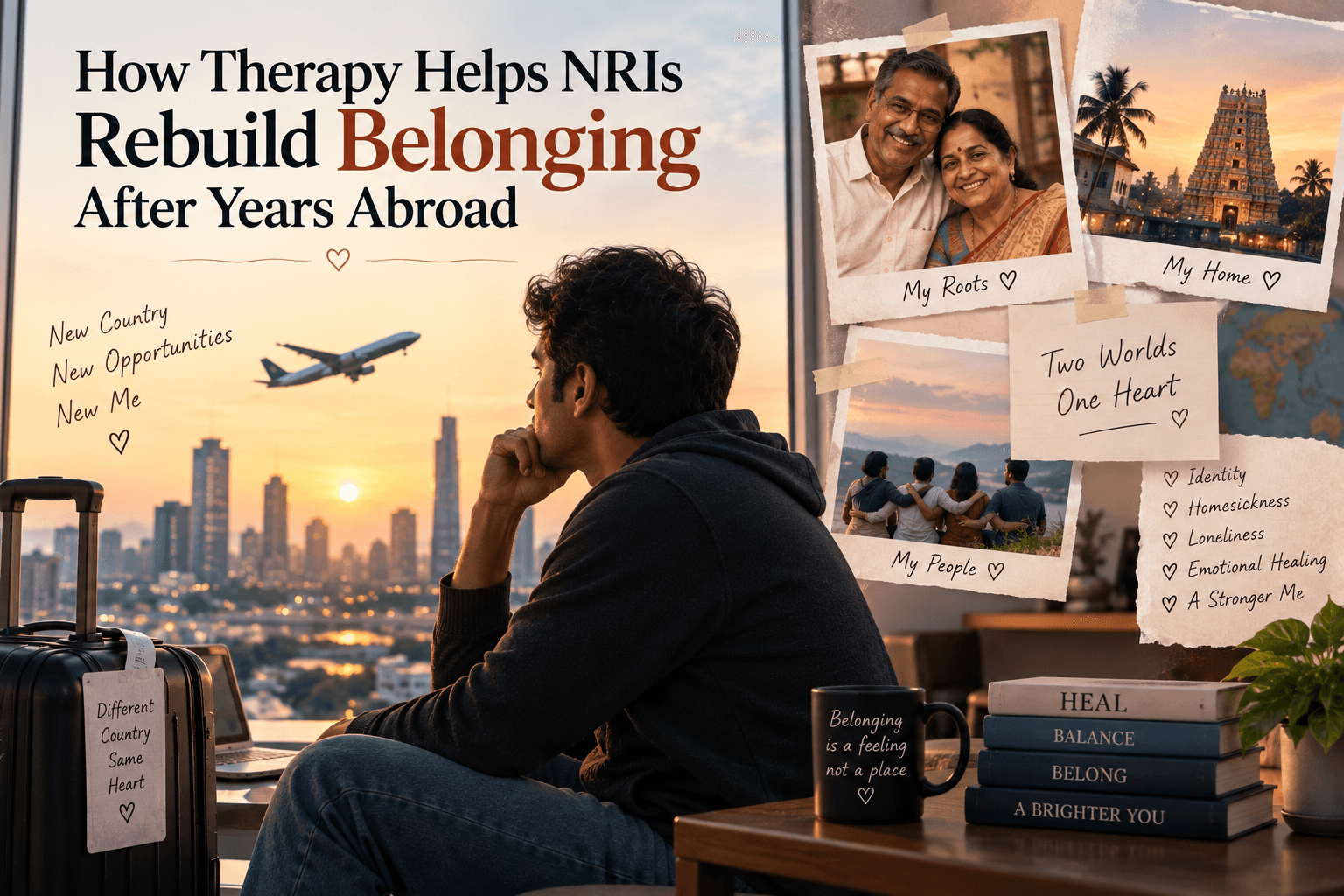
How Therapy Helps NRIs Rebuild Belonging After Years Abroad
Many NRIs struggle to rebuild belonging after years abroad because of homesickness, cultural identity conflict, loneliness, family distance, and emotional disconnection. This blog explains how therapy helps NRIs understand their emotional journey, process guilt, reconnect with their identity, and create a sense of belonging both abroad and within themselves. Support from India Therapist, a therapist in India, or an Indian therapist online can help NRIs feel more grounded and emotionally connected.

Why NRIs Feel Emotionally Stuck Between Duty and Freedom
Many NRIs feel emotionally stuck between family duty and personal freedom. They may want independence, but guilt, family pressure, cultural expectations, and emotional responsibility make every choice feel heavy. This blog explains how therapy with India Therapist, a therapist in India, or an Indian therapist online can help NRIs build boundaries, process guilt, strengthen self-worth, and create a life that honors both family love and personal wellbeing.

How Relationship Problems Affect Mental Health
Relationship problems can have a significant impact on mental health, affecting emotions, confidence, sleep, and everyday life. This blog explores how conflict, trust issues, emotional distance, breakups, and unhealthy relationship patterns can contribute to stress, anxiety, loneliness, and low self-esteem. It also explains how therapy and relationship counselling can provide professional support, improve communication, and help people better understand their emotions and relationships.

Mental Health Myths You Should Stop Believing
Mental health myths can create unnecessary fear, shame, and confusion about therapy and emotional well-being. This blog explores common misconceptions about mental health, including the belief that therapy is only for people with serious mental illnesses or that asking for help is a sign of weakness. It explains the benefits of professional counselling and encourages readers to seek support when emotional or psychological challenges begin affecting their daily lives. With IndiaTherapist, taking the first step toward better mental well-being can begin with a safe and supportive conversation.

The Emotional Cost of Living Abroad While Family Life Moves On
Many NRIs experience emotional pain while living abroad because family life continues back home without them. Missing birthdays, festivals, everyday conversations, aging parents, and important family moments can create grief, guilt, regret, and emotional distance. This blog explains how therapy with India Therapist, a therapist in India, or an Indian therapist online can help NRIs process NRI guilt, homesickness, loneliness, and emotional healing.

Why NRIs Feel Like Their Heart Lives in Two Countries
Many NRIs feel like their heart lives in two countries because they are emotionally connected to both India and their life abroad. This can create homesickness, identity conflict, guilt, loneliness, and a complicated sense of belonging. This blog explains how therapy with India Therapist, a therapist in India, or an Indian therapist online can help NRIs process emotional conflict, reconnect with themselves, and build a sense of inner belonging.