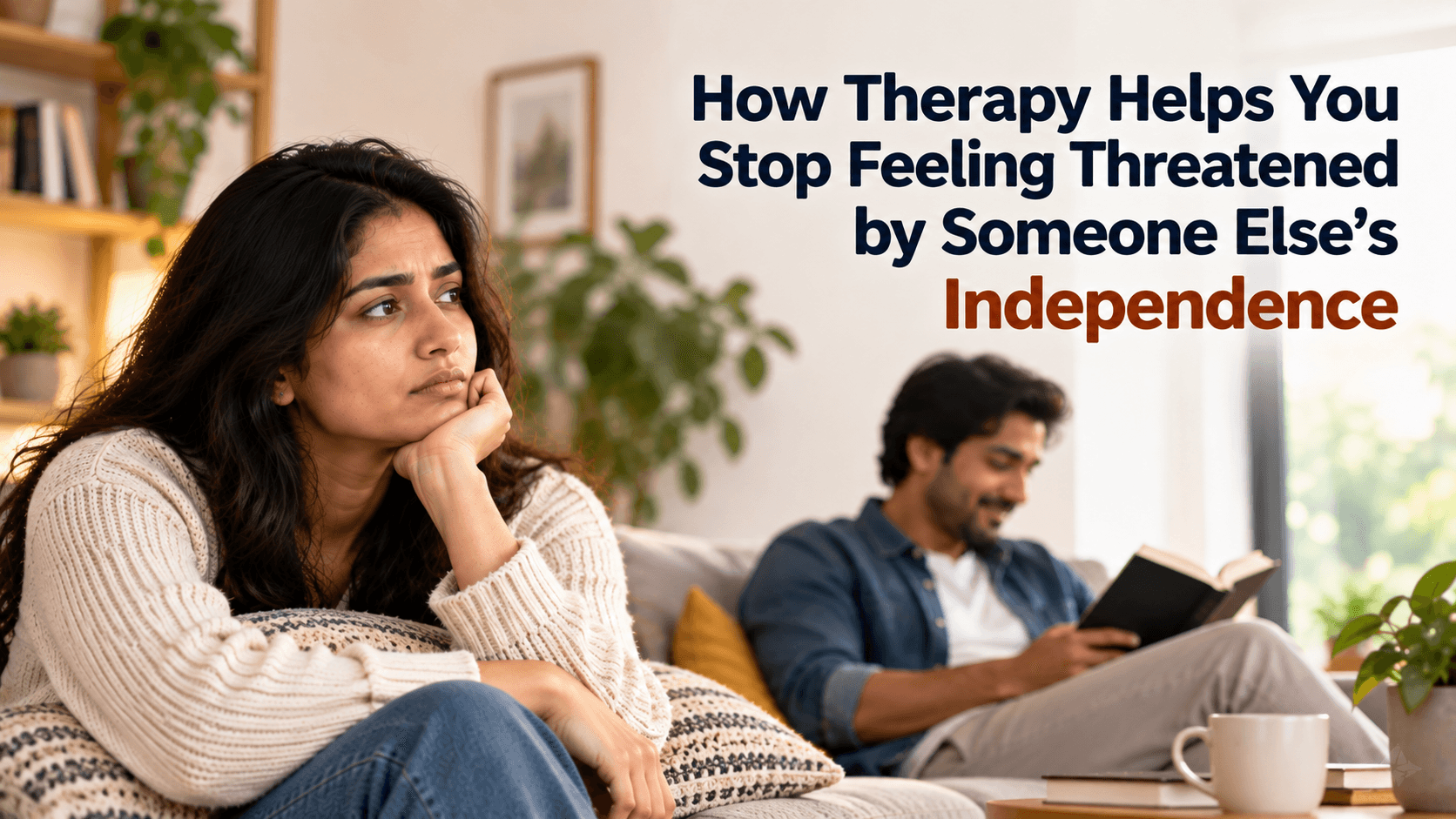
How Therapy Helps You Stop Feeling Threatened by Someone Else’s Independence
How Therapy Helps You Stop Feeling Threatened by Someone Else’s Independence
Focus: Attachment anxiety, insecurity, control, self-worth
Someone you care about becoming more independent should ideally feel healthy. They may spend more time with friends, focus on work, pursue hobbies, travel alone, or simply need more personal space. Yet instead of feeling secure, you may notice anxiety rising. Their independence can start to feel like emotional distance, and emotional distance can quickly feel like rejection.
At India Therapist, many people come to therapy because they feel uneasy when a partner, friend, or family member begins needing them less. They may worry that independence means the relationship is becoming weaker or that they are slowly becoming less important. Therapy can help you understand where this fear comes from, reduce attachment anxiety, strengthen self-worth, and build relationships where closeness does not depend on constant dependence.
Why Someone Else’s Independence Can Feel Threatening
When you are emotionally attached to someone, their presence can become an important source of security. You may feel reassured when they call often, ask for your advice, spend most of their free time with you, or involve you in every decision.
When that pattern changes, your mind may interpret the change as danger. You may think, “Why don’t they need me anymore?” or “What if they realize they are happier without me?”
A therapist in India can help you understand that these fears are often connected to attachment rather than the present situation itself. Someone becoming more independent does not automatically mean they are becoming less emotionally connected to you.
Attachment Anxiety Can Make Space Feel Like Rejection
Attachment anxiety often creates a strong sensitivity to changes in closeness. You may notice small shifts in communication, availability, or affection and immediately assume something is wrong.
If your partner begins spending more time on their own interests, you may feel excluded. If they want a weekend with friends, you may wonder whether they are losing interest. Even healthy requests for personal space can feel like warning signs.
An Indian therapist online can help you recognize that needing space is a normal part of healthy relationships. Closeness does not require constant contact. In secure relationships, both people can have independent lives while still feeling emotionally connected.
Insecurity Can Make Independence Feel Personal
When self-worth is fragile, another person’s independence can easily become a judgment about you. You may think, “If they do not need me, maybe I am not important,” or “If they can handle life without me, what is my place?”
This can create a strong desire to stay involved in everything they do. You may want constant updates, reassurance, or confirmation that you still matter.
Therapy helps you separate your value from how dependent someone is on you. You do not become less worthy because someone learns to solve their own problems, develop new friendships, or enjoy time alone.
Healthy love is not measured by how helpless someone would feel without you.
Control Can Sometimes Grow From Fear
When independence feels threatening, control can become a way of managing anxiety. You may ask where someone is going, who they are meeting, or why they did not tell you sooner. You may become upset when plans are made without you or feel the need to be included in every decision.
From the outside, this may look controlling. Underneath, however, there may be fear.
You may be trying to prevent emotional distance before it happens. Therapy helps you understand the fear underneath controlling behaviors so you can respond differently.
Instead of trying to manage the other person’s independence, you can learn to communicate your insecurity directly and build more trust in the relationship.
Being Needed Can Become Part of Your Identity
Some people feel most secure when they are useful. You may be the person who solves problems, gives advice, manages responsibilities, or provides emotional support. Being needed can make you feel important.
When someone becomes more independent, you may suddenly feel uncertain about your role.
Therapy can help you explore whether your identity has become too connected to being needed. You are allowed to be important in someone’s life even when they do not depend on you for everything.
Your relationship can be based on mutual enjoyment, emotional intimacy, shared values, and respect rather than dependence alone.
Healthy Relationships Need Both Connection and Independence
Healthy relationships are not built on two people becoming completely dependent on each other. They usually include both closeness and individuality.
Each person may have separate friendships, interests, goals, and time alone while still choosing the relationship. In fact, independence can make relationships stronger because both people continue developing as individuals.
Therapy helps you move away from the belief that independence threatens connection. You can begin seeing it as evidence that the relationship has enough security to allow both people to grow.
Why You May Feel Left Behind
Sometimes another person’s growth can trigger your own insecurity. If they start a new hobby, become more confident, travel, make new friends, or advance professionally, you may begin comparing yourself.
You may think, “They are growing and I am staying the same,” or “What if they outgrow me?”
These fears can create resentment toward changes that would otherwise be positive.
Therapy helps you shift attention back toward your own life. Instead of trying to limit someone else’s growth, you can explore what you want to develop for yourself.
A stronger sense of identity often makes another person’s independence feel less threatening.
Self-Worth Makes Space Easier to Tolerate
When your self-worth becomes stronger, you no longer need constant evidence that someone values you. You can tolerate periods when they are busy, focused elsewhere, or enjoying experiences that do not include you.
You know that your value does not disappear when their attention moves somewhere else temporarily.
Therapy helps build this internal stability. You may learn to recognize your strengths, reconnect with interests, invest in friendships, and create routines that are meaningful outside the relationship.
The more complete your own life feels, the less frightening someone else’s independence becomes.
Communication Helps Without Turning Independence Into Conflict
It is healthy to talk about insecurity. The problem comes when fear is expressed through accusations or attempts to control.
Instead of saying, “You clearly care more about your friends now,” you might say, “I noticed I have been feeling insecure as we spend more time doing separate things. I want to understand that feeling rather than make it your responsibility.”
This kind of communication creates connection without demanding that the other person become less independent.
Therapy helps you communicate vulnerability clearly while still respecting another person’s autonomy.
How Therapy Helps Reduce the Fear
Therapy can help you understand when the fear began and what it represents. You may discover that independence reminds you of abandonment, previous betrayal, inconsistent caregiving, or relationships where someone became distant before leaving.
Once you understand the pattern, you can respond more intentionally.
Therapy can help you:
recognize attachment anxiety
understand controlling behaviors without shame
strengthen self-worth
tolerate healthy space
reduce reassurance-seeking
communicate insecurity more clearly
build identity outside the relationship
develop trust in both yourself and others
At India Therapist, culturally sensitive therapists in India and Indian therapists online can support people struggling with attachment anxiety, insecurity, relationship control, fear of abandonment, and low self-worth.
Their Independence Does Not Automatically Reduce Your Importance
Someone can become more independent and still love you deeply. A partner can enjoy time alone and still value the relationship. A friend can develop new friendships without replacing you. A family member can handle more things independently while still feeling connected to you.
Relationships naturally evolve.
Trying to keep someone dependent may temporarily reduce anxiety, but it can eventually create resentment or imbalance. Allowing space can feel frightening at first, but it also gives the relationship room to become healthier.
You Do Not Have to Be Needed to Be Chosen
One of the most powerful shifts in therapy is learning the difference between being needed and being chosen.
Being needed can create security because the other person depends on you. Being chosen can feel more vulnerable because they could function independently and still decide that they want you in their life.
But that kind of connection can be much healthier.
You are not valuable because someone cannot live without you. You are valuable because of who you are and what you bring to the relationship.
Independence and Love Can Exist Together
Someone else’s independence does not have to mean emotional distance. It can mean they feel safe enough to grow while remaining connected to you.
You are allowed to have your own life too. You can build friendships, interests, goals, and confidence that exist outside the relationship.
The goal is not to become emotionally detached from each other. It is to create a relationship where both people can be close without losing themselves.
Therapy helps you move from “If they need me less, they may love me less” to “They can be independent, I can be independent, and we can still choose each other.”
Ready to talk to someone who understands?
Connect with an Indian therapist who speaks your language and understands your cultural context.