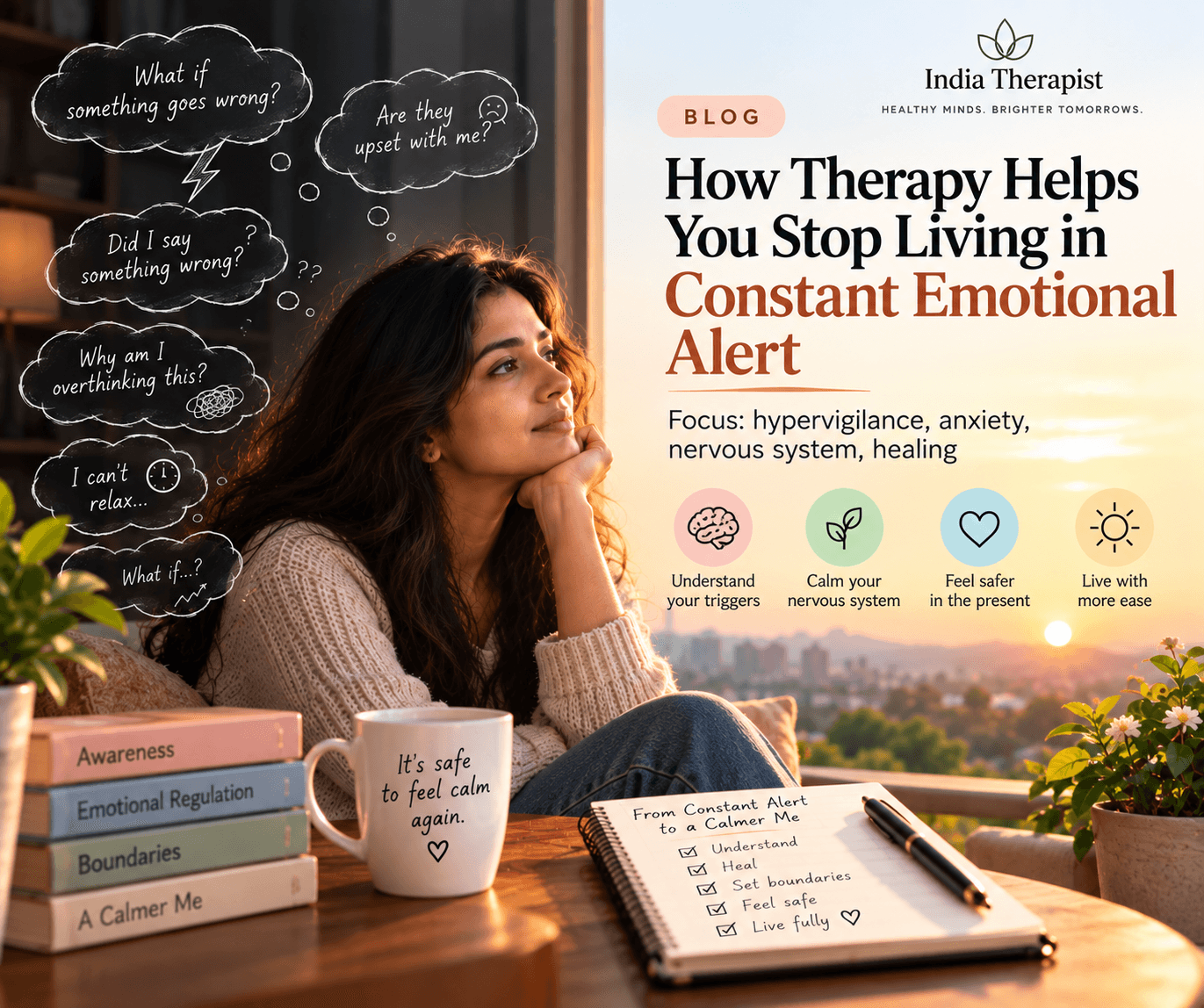
How Therapy Helps You Stop Living in Constant Emotional Alert
How Therapy Helps You Stop Living in Constant Emotional Alert
Focus: Hypervigilance, anxiety, nervous system, healing
Living in constant emotional alert can feel like your mind never truly switches off. Even when nothing is obviously wrong, part of you may still be watching for changes in someone’s tone, expecting conflict, checking whether people are upset, or preparing for something bad to happen. You may struggle to relax because calm does not always feel completely safe.
For some people, this pattern develops after long periods of stress, unpredictable relationships, family conflict, emotional criticism, or experiences where they constantly had to watch what was happening around them. At India Therapist, many people seek therapy because they feel exhausted from always being mentally prepared for the next problem. Therapy can help you understand why this emotional alertness developed, recognize your triggers, regulate anxiety, and gradually create a stronger sense of emotional safety.
What Does Constant Emotional Alert Feel Like?
Constant emotional alertness can show up in subtle ways. You may immediately notice when someone’s expression changes or when a text message sounds slightly different. You may replay conversations afterward, wondering whether you said something wrong. Sometimes, even a quiet room can feel uncomfortable because your mind starts searching for something to worry about.
You may also find it difficult to enjoy good moments fully. Instead of relaxing, part of your mind may ask, “How long will this last?” or “What if something goes wrong?” This constant scanning can leave you mentally tired, physically tense, and emotionally drained even when your day does not look particularly stressful from the outside.
Why Hypervigilance Can Develop
Hypervigilance describes a state of being unusually alert to possible danger or emotional threat. It can appear in people who have spent long periods in stressful, unpredictable, or emotionally unsafe situations. Your mind may have learned that carefully monitoring people and situations helped you prepare for what came next.
For example, if someone in your family was frequently angry or unpredictable, you may have learned to notice tiny changes in their mood. If a past relationship involved criticism, withdrawal, or repeated conflict, you may have become very sensitive to silence or changes in communication. These responses may once have helped you cope, but they can continue even when your current environment is safer.
Anxiety Can Keep the Body and Mind “On”
When anxiety becomes persistent, your mind may struggle to distinguish between an immediate problem and a possibility. A delayed reply can feel like rejection. A disagreement may feel like the beginning of a bigger conflict. A minor mistake at work may lead to hours of worrying about consequences.
This constant anticipation can make relaxation difficult. You may notice muscle tension, restlessness, trouble concentrating, difficulty sleeping, or a strong need to stay busy. A therapist in India can help you identify the situations that activate this pattern and develop healthier ways to respond rather than automatically preparing for the worst.
Why Calm Can Sometimes Feel Uncomfortable
It may sound strange, but people who have lived with stress for a long time can sometimes find calm uncomfortable. When you are used to solving problems, reading moods, or staying prepared, suddenly having nothing to manage can feel unfamiliar.
You may create things to worry about, check your phone repeatedly, overthink old conversations, or feel restless during downtime. The issue is not that you consciously want stress. Your mind may simply have become accustomed to operating in a state of high alert.
Therapy can help you gradually become more comfortable with calm. Instead of treating quiet moments as a signal that something must be wrong, you can begin experiencing them as safe and restorative.
How Constant Alertness Affects Relationships
Living in emotional alert can make relationships harder. You may read meaning into small changes in communication, worry that someone is upset, or repeatedly ask whether everything is okay. You may also avoid expressing your needs because you fear creating conflict.
In other cases, you may become defensive quickly because your mind interprets feedback as a threat. This can create misunderstandings even when both people care about each other. Therapy helps you slow down these reactions and understand what belongs to the present relationship and what may be connected to past experiences.
Relationship counselling India can also help couples understand how anxiety, attachment, communication patterns, and emotional safety influence the way they respond to one another.
The Role of the Nervous System
Your nervous system helps your body respond to stress and return toward a calmer state afterward. When stress feels frequent or unpredictable, the body may become quicker to react to possible threats. This does not mean something is permanently wrong with you. It means your stress response may have become highly practiced.
Therapy can support emotional regulation by helping you notice early signs of activation and learn ways to respond before anxiety becomes overwhelming. This may involve grounding techniques, breathing practices, identifying thoughts, improving sleep routines, developing boundaries, or changing the way you interpret certain triggers.
An Indian therapist online can work with you to understand which strategies fit your individual experience rather than expecting one technique to work for everyone.
How Therapy Helps You Recognize Your Triggers
A major part of therapy involves understanding what puts you into emotional alert. The trigger may not always be obvious. It could be someone becoming quiet, a change in routine, criticism, conflict, uncertainty, or feeling that you have lost control of a situation.
Therapy may help you ask:
What happened just before I became anxious?
What did I immediately assume?
What was I afraid would happen next?
Does this situation remind me of an earlier experience?
What evidence do I have that I am unsafe right now?
Recognizing these patterns helps create a pause between the trigger and the reaction. With practice, that pause can become a place where you make a more deliberate choice.
Building Emotional Safety Through Boundaries
Sometimes constant emotional alertness continues because your environment still demands too much from you. You may be surrounded by people who expect constant availability, react unpredictably, or ignore your limits. In those situations, coping skills alone may not be enough.
Healthy boundaries can reduce unnecessary emotional pressure. You may need to limit certain conversations, stop taking responsibility for everyone’s mood, create space after stressful interactions, or become more honest about what you can and cannot manage.
Therapy helps you understand that emotional safety is not only something you create inside yourself. It is also influenced by the relationships and environments you allow around you.
Why This Can Be Difficult for NRIs
NRIs may experience a different form of constant alertness because they are often managing responsibilities across countries. Work pressure, visa uncertainty, time-zone calls, aging parents, family emergencies, financial responsibilities, and cultural adjustment can make it difficult to fully switch off.
You may feel that you always need to keep your phone nearby in case something happens back home. A late-night call from India may immediately trigger anxiety. Even when your daily life abroad is stable, part of your mind may remain connected to what could be happening thousands of miles away.
NRI counselling mental health with an online Indian therapist can help you process these experiences in a culturally sensitive way. Therapy can support you in balancing responsibility with rest rather than living as if you must be emotionally available every minute.
How Therapy Helps You Move From Alertness to Awareness
The goal of therapy is not to make you careless or completely remove anxiety. Some alertness is useful. The goal is to help your mind respond proportionately to what is actually happening.
Therapy can help you understand your emotional patterns, challenge catastrophic thinking, regulate anxiety, strengthen boundaries, and build trust in your ability to handle uncertainty. Over time, you may notice that a delayed reply no longer ruins your evening, a disagreement does not automatically feel like abandonment, and quiet moments become easier to tolerate.
At India Therapist, culturally sensitive therapists in India and Indian therapists online can support people struggling with anxiety, hypervigilance, emotional exhaustion, relationship stress, overthinking, and difficulty relaxing.
You Do Not Have to Stay Prepared for Everything
Constant emotional alertness can create the feeling that if you stop watching carefully, something bad will happen. But living in permanent preparation can prevent you from experiencing the life happening in front of you.
Healing does not mean ignoring genuine problems. It means learning when a threat is real and when your mind is responding to an old pattern. You can become more aware without being constantly afraid. You can care about people without monitoring every mood. You can prepare for important responsibilities without mentally rehearsing every possible disaster.
Therapy can help your mind learn that not every silence means rejection, not every change means danger, and not every peaceful moment needs to be interrupted by worry. Sometimes, you are allowed to simply feel safe.
Ready to talk to someone who understands?
Connect with an Indian therapist who speaks your language and understands your cultural context.