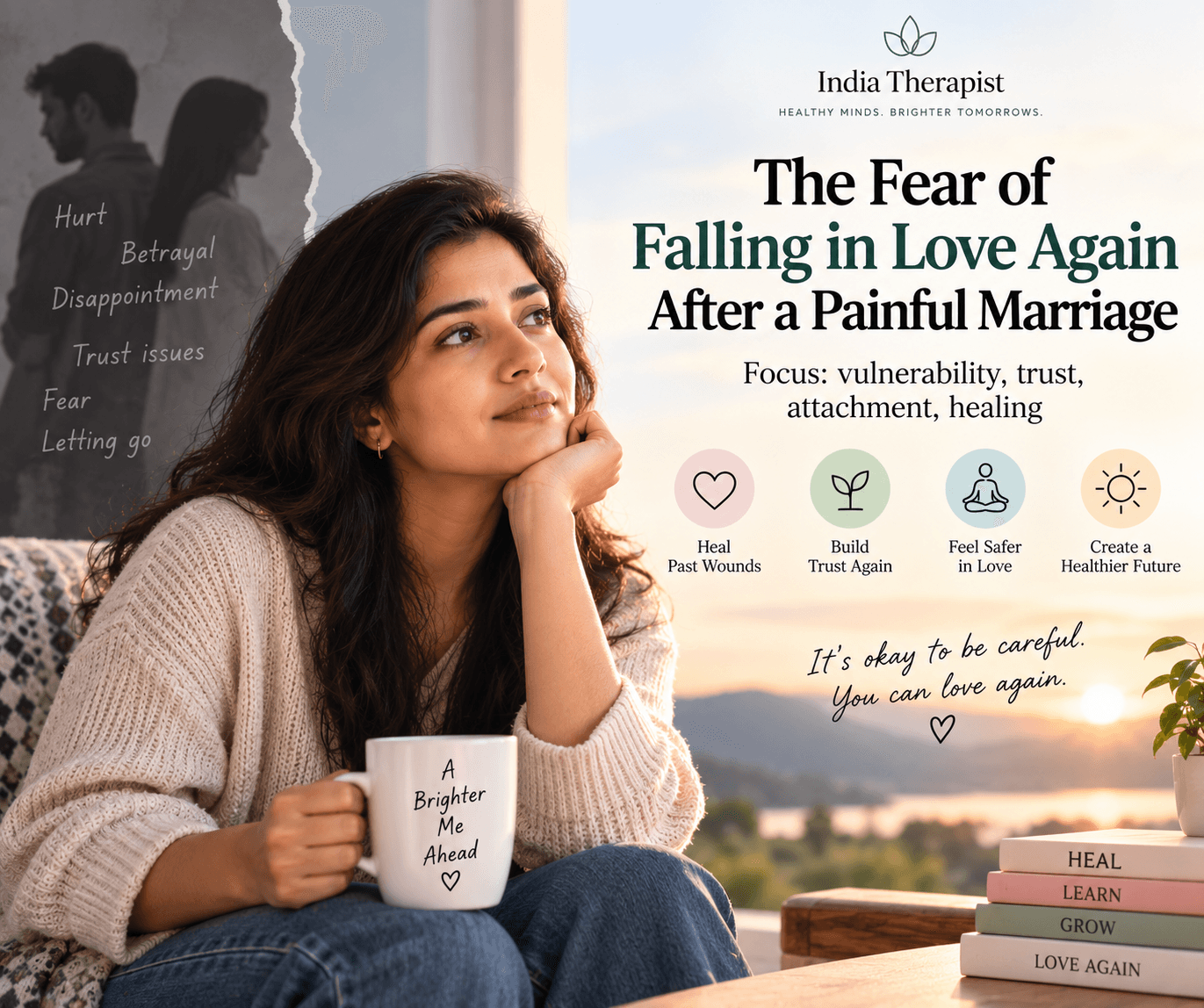
The Fear of Falling in Love Again After a Painful Marriage
The Fear of Falling in Love Again After a Painful Marriage
Focus: Vulnerability, trust, attachment, healing
Falling in love again after a painful marriage can feel very different from falling in love for the first time. The desire for connection may still be there, but it is often mixed with fear. You may want companionship, affection, and emotional closeness, yet another part of you may be constantly warning, “What if this happens again?”
After betrayal, emotional neglect, repeated conflict, divorce, or a deeply disappointing marriage, trusting someone new can feel risky. A simple disagreement may bring back memories of old arguments. A delayed reply may trigger fears of rejection. Even when a new person treats you well, you may find yourself looking for signs that something will eventually go wrong.
At India Therapist, many people come to therapy after separation or divorce because they want to move forward but do not know how to feel emotionally safe in love again. Therapy can help you understand how past relationship pain affects vulnerability, attachment, trust, and the way you approach new relationships.
Why Love Can Feel Dangerous After a Painful Marriage
A painful marriage can teach your mind to associate closeness with hurt. If you spent years dealing with criticism, betrayal, emotional distance, manipulation, or constant conflict, your nervous system may become highly alert in relationships.
You may start expecting disappointment before it happens. Even when someone is kind, part of you may wonder whether it is temporary. If your previous partner broke your trust, you may find it difficult to believe another person’s promises.
This does not mean you are incapable of loving again. It often means your mind is trying to protect you from experiencing the same pain twice.
A therapist in India can help you recognize when caution is protecting you and when fear is preventing you from forming healthy emotional connections.
Vulnerability Can Feel Much Harder the Second Time
Love requires vulnerability. You allow another person to see your emotions, needs, fears, hopes, and imperfections. After a painful marriage, this kind of openness can feel threatening.
You may think, “If I show too much, they can hurt me.” You may hide your emotions, avoid discussing the future, or keep people at a distance even when you genuinely like them.
Sometimes, people believe they are simply being “careful,” but underneath that caution may be a fear of rejection or abandonment. Therapy helps you explore what vulnerability means to you now and how to open up gradually without ignoring your boundaries.
Healthy vulnerability does not mean telling someone everything immediately. It means allowing trust to develop slowly through consistency, respect, and emotional safety.
How Attachment Wounds Can Follow You Into New Relationships
Past relationships can influence how you experience new ones. If your marriage involved emotional inconsistency, abandonment, betrayal, or repeated rejection, those experiences may create attachment wounds.
You may become anxious when someone needs space. You may overthink small changes in communication. You may seek reassurance frequently because you are afraid of being left again.
On the other hand, you may react by becoming emotionally distant. You may avoid commitment, pull away when someone becomes close, or convince yourself that relationships are not worth the risk.
Neither response means something is wrong with you. They are often ways the mind learns to protect itself.
An Indian therapist online can help you recognize these attachment patterns and understand whether your reactions are responding to the person in front of you or to something that happened in your past.
The Fear of Choosing the Wrong Person Again
After divorce, many people begin questioning their own judgment.
You may wonder, “How did I not see the warning signs?” or “What if I choose another person who hurts me?”
This can make dating emotionally exhausting. Instead of getting to know someone naturally, you may constantly analyze every word, behavior, or disagreement. You may look for red flags everywhere because you are terrified of repeating your past.
Some caution is healthy, but constant fear can make genuine connection difficult.
Therapy can help you rebuild trust in your ability to make decisions. You learn that making a painful relationship choice in the past does not mean you are incapable of making healthy choices in the future.
You can learn from experience without becoming controlled by it.
Trust Does Not Have to Happen All at Once
After being hurt, people sometimes believe they must either trust completely or not trust at all. Healthy trust usually develops gradually.
You do not have to give someone immediate access to every part of your life. You can observe how they communicate, whether their actions match their words, how they respond to boundaries, and how they behave during disagreements.
Trust grows through repeated experiences of consistency.
Therapy can help you identify what emotional safety looks like for you. Instead of relying only on chemistry or attraction, you begin paying attention to respect, honesty, reliability, communication, and mutual effort.
This can make future relationships feel more grounded.
Comparing a New Partner With Your Ex
After a painful marriage, it is natural to compare new people with your former partner. Sometimes the comparison protects you from repeating unhealthy patterns. But sometimes it can prevent you from seeing the new relationship clearly.
If your ex was dishonest, you may become suspicious whenever a new partner is private. If your previous marriage involved emotional neglect, you may panic when someone is temporarily busy.
The past can become a filter through which you interpret the present.
Therapy helps you recognize when an old wound has been activated. Instead of immediately reacting, you can ask yourself whether the current person has actually done something unsafe or whether the situation simply reminds you of something painful.
That awareness can prevent old relationships from controlling new ones.
Family Pressure Can Complicate Dating After Divorce
For many Indians, dating after divorce is not only a personal decision. Family members may have strong opinions about remarriage, how quickly you should move on, or what kind of partner you should choose next.
Some families may pressure you to remarry quickly because they worry about your future. Others may discourage dating altogether because of stigma or fear of another relationship failing.
This can leave you feeling caught between your own emotional readiness and what other people expect.
Therapy in India can help you separate your needs from external pressure. You can decide when you are ready to date, what kind of relationship you want, and what boundaries you need with family.
There is no correct timeline for falling in love again.
How Therapy Helps Rebuild Emotional Safety
Therapy provides a space where you can process the old relationship before asking a new relationship to heal it for you.
You may work through betrayal, grief, anger, rejection, shame, or resentment. You may understand why certain situations trigger you and learn healthier ways to communicate fear.
Therapy can also help you:
Rebuild trust in your own judgment
Understand attachment patterns
Recognize healthy and unhealthy relationship behaviors
Strengthen boundaries
Communicate needs clearly
Reduce fear of rejection
Develop emotional regulation
Learn how to trust gradually
Separate past experiences from present relationships
At India Therapist, culturally sensitive therapists in India and Indian therapists online can support people who are navigating divorce recovery, relationship anxiety, attachment wounds, vulnerability, and rebuilding trust.
You Do Not Have to Rush Into Love Again
Healing does not mean you have to prove that you are ready for another relationship. You are allowed to take your time.
You may want companionship but not commitment yet. You may want to date slowly. You may decide you need more time alone before letting someone into your life.
The goal is not to eliminate every fear before loving again. Some vulnerability will always exist in close relationships. The goal is to become secure enough within yourself that fear no longer makes every decision for you.
A healthier relationship after divorce often begins with a healthier relationship with yourself.
You learn to trust your feelings, respect your boundaries, recognize your needs, and walk away when something repeatedly feels unsafe.
Falling in love again does not mean forgetting what happened.
It means allowing the past to teach you without allowing it to imprison you.
You can be careful without closing your heart. You can carry lessons without carrying constant fear. And when you are ready, love can feel like connection again instead of danger.
Ready to talk to someone who understands?
Connect with an Indian therapist who speaks your language and understands your cultural context.