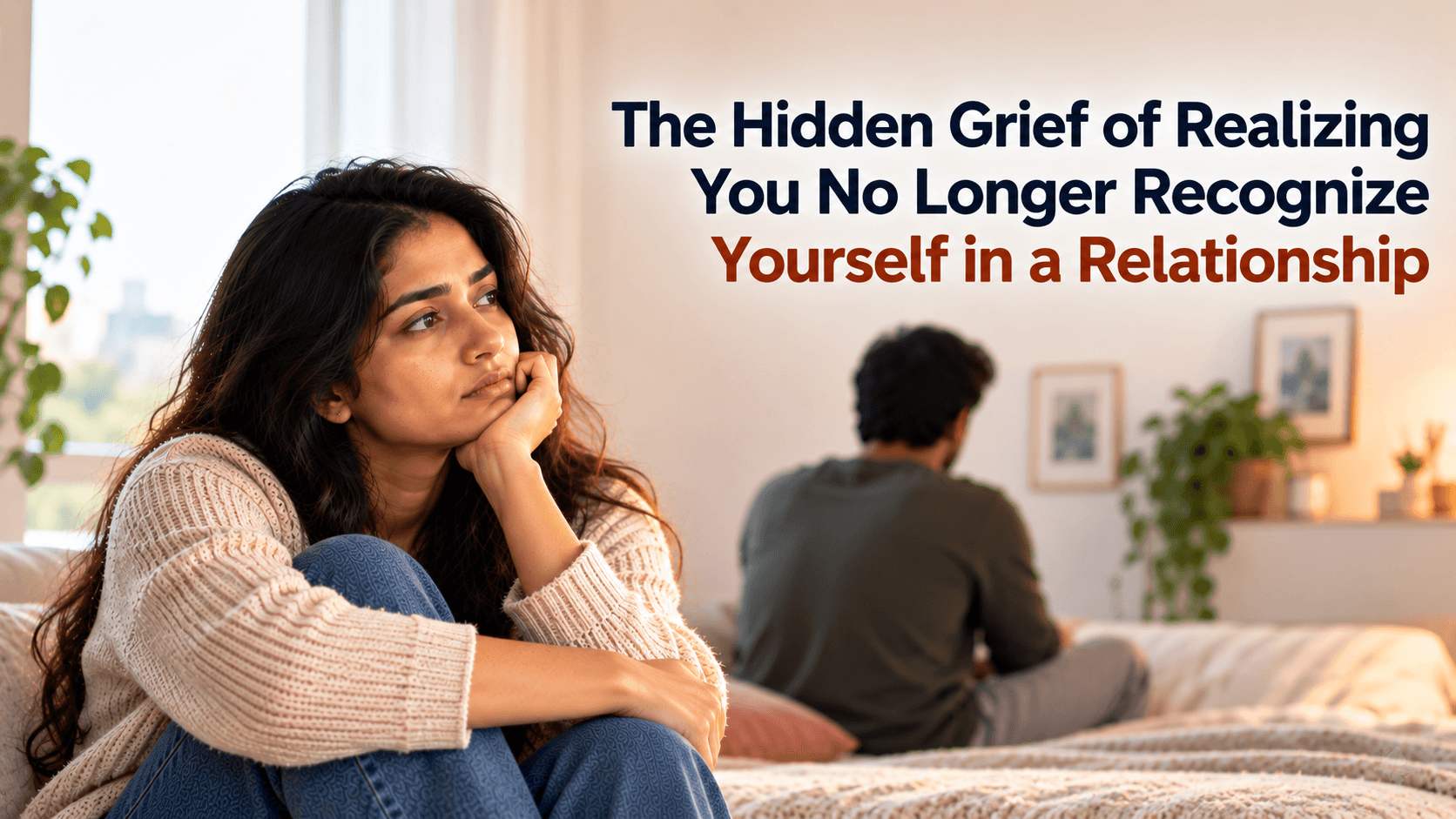
The Hidden Grief of Realizing You No Longer Recognize Yourself in a Relationship
The Hidden Grief of Realizing You No Longer Recognize Yourself in a Relationship
Focus: Identity loss, self-silencing, emotional exhaustion, healing
One of the most painful realizations in a relationship is noticing that you no longer feel like the person you used to be. You may look back and remember being more confident, expressive, social, spontaneous, or hopeful. Somewhere along the way, you became quieter, more careful, more tired, or more focused on keeping the relationship stable than on being yourself.
At India Therapist, many people come to therapy because they feel emotionally disconnected from their own identity. They may still love their partner and care about the relationship, yet they also feel that parts of themselves have slowly disappeared. Therapy can help you understand how this happened, process the grief of losing connection with yourself, rebuild confidence, and create relationships where love does not require you to become smaller.
Identity Loss Can Happen Slowly
Most people do not consciously decide to lose themselves in a relationship. It usually happens through small adjustments. You stop bringing up certain topics because they lead to arguments. You spend less time with friends because your partner feels uncomfortable. You give up hobbies because there is never enough time. You begin making decisions based on what will keep the relationship peaceful rather than what you actually want.
Each adjustment may seem reasonable on its own. But over months or years, those small changes can add up. One day, you may realize that your routines, preferences, friendships, and even opinions are very different from who you once were.
A therapist in India can help you look at these changes without immediately blaming yourself. Understanding how identity loss developed is often the first step toward rebuilding it.
Self-Silencing Can Make You Feel Invisible
Self-silencing happens when you repeatedly stop yourself from expressing feelings, needs, opinions, or boundaries because you fear conflict or rejection. You may think, “It is easier if I do not say anything,” or “I do not want another argument.”
Over time, you may become very good at predicting what the other person wants and very disconnected from what you want. You begin editing yourself before you even speak.
This can create a painful sense of invisibility. You may feel that the person you love knows the version of you who keeps the peace but not the fuller version of you underneath.
Therapy helps you notice where you started silencing yourself and why expressing your needs began to feel unsafe.
Emotional Exhaustion Can Change Your Personality
When a relationship requires constant emotional monitoring, problem-solving, reassurance, or conflict management, exhaustion can become part of everyday life. You may feel mentally tired before conversations even begin.
Over time, this exhaustion can change how you show up in the world. You may stop making plans, become less social, lose motivation, or feel emotionally numb. Things that once brought joy may start feeling like too much effort.
An Indian therapist online can help you understand that emotional exhaustion is not laziness or a personality flaw. Sometimes it is the result of spending too much energy managing a relationship and too little energy caring for yourself.
You May Start Living Around the Relationship
In a healthy relationship, love becomes one part of your life. But when identity begins disappearing, the relationship can slowly become the center around which everything else revolves.
You may plan your day around your partner’s moods, decisions, schedule, or emotional needs. You may postpone your own goals because there is always another relationship issue to solve. You may stop investing in friendships or hobbies because so much emotional energy goes into maintaining the connection.
Eventually, you may ask yourself, “What would my life even look like outside this relationship?”
Therapy can help you separate who you are from the role you play inside the relationship. You can love someone without allowing the relationship to become your entire identity.
The Grief Comes From Missing Yourself
Identity loss creates a unique kind of grief because you may not only be grieving the relationship. You may be grieving yourself.
You may remember how easily you laughed, how confidently you spoke, or how excited you once felt about your future. Looking at old photographs, reconnecting with friends, or returning to a forgotten hobby may remind you how much has changed.
That realization can bring sadness, anger, and regret. You may wonder why you allowed yourself to become so different.
Therapy helps you move away from harsh self-blame. You may have adapted because you were trying to protect the relationship, avoid conflict, or maintain emotional safety. Understanding those reasons does not mean the changes were healthy, but it gives them context.
You May Feel Guilty for Wanting Yourself Back
Sometimes wanting to reclaim your identity can feel selfish. You may worry that spending more time alone, reconnecting with friends, pursuing personal goals, or setting stronger boundaries will hurt the relationship.
You may have become so accustomed to prioritizing the relationship that choosing yourself feels like betrayal.
But healthy relationships make room for two complete people.
Therapy in India can help you understand that individuality is not the opposite of commitment. You can have personal interests, friendships, opinions, and goals while still being emotionally connected to someone.
You do not have to disappear to prove that you love.
Conflict Fear Can Keep Identity Loss Going
Many people continue self-silencing because they are afraid of what will happen if they change. You may know that you want stronger boundaries or more independence, but worry that your partner will react badly.
You may think, “What if they say I have changed?” or “What if they think I do not care anymore?”
These fears can keep you stuck in a version of yourself that no longer feels authentic.
Therapy helps you understand that growth often changes relationship dynamics. When you begin speaking more honestly, setting boundaries, or choosing differently, the people around you may need time to adjust.
Their discomfort does not automatically mean your growth is wrong.
Rebuilding Identity Starts With Small Choices
Rediscovering yourself does not require making dramatic changes overnight. Often, healing begins with small decisions that reconnect you with your preferences.
You might choose what you want to eat without checking first. You may return to a hobby, call an old friend, wear something that feels like you, or spend time alone without feeling guilty.
These choices seem simple, but they rebuild self-trust.
Therapy helps you notice what brings you energy, what feels meaningful, and what parts of yourself you want to reclaim. Over time, these small decisions can create a stronger sense of identity.
Therapy Helps You Separate Love From Self-Abandonment
One of the most important lessons in therapy is learning that compromise and self-abandonment are not the same thing.
Healthy relationships involve adjustment. Sometimes you choose differently because your partner’s needs matter to you. But if you repeatedly ignore your own needs, values, boundaries, and emotions just to maintain the relationship, the cost becomes much higher.
Therapy helps you ask whether your compromises are mutual or whether one person is consistently disappearing.
At India Therapist, culturally sensitive therapists in India and Indian therapists online can support people dealing with identity loss, self-silencing, emotional exhaustion, relationship anxiety, and difficulty setting boundaries.
You Can Rebuild Yourself Without Becoming the Old You
Healing does not necessarily mean returning to exactly who you were before the relationship. Experiences change us. Some changes may even be valuable.
The goal is to decide which parts of yourself you want to carry forward and which patterns you are ready to leave behind.
You may become more self-aware, more selective about relationships, clearer about your boundaries, or more honest about your needs. These changes can become part of a stronger identity.
You are not required to recreate the past. You can build a version of yourself that feels more authentic now.
Healthy Love Should Leave Room for Your Identity
A healthy relationship should allow you to remain curious, expressive, connected to friends, interested in your own goals, and comfortable having opinions that differ from your partner’s.
You should be able to say no without fearing that the relationship will collapse. You should be able to grow without feeling that growth threatens the connection.
Love should add to your life, not slowly remove the parts that make you who you are.
Therapy helps you understand what emotional safety looks like and whether your relationship gives you enough room to exist as a whole person.
Healing Begins When You Start Recognizing Yourself Again
One of the most meaningful signs of healing is noticing that pieces of yourself are returning. You may laugh more freely, speak more openly, reconnect with people you missed, or feel excited about plans that belong to you.
These changes may happen gradually, but they matter.
You begin realizing that your identity was not permanently lost. Parts of you may have become quiet, exhausted, or hidden, but they can still be rediscovered.
Therapy helps you move from “I do not recognize who I became in this relationship” to “I can understand how I changed, reconnect with myself, and build relationships where I do not have to disappear to be loved.”
Ready to talk to someone who understands?
Connect with an Indian therapist who speaks your language and understands your cultural context.