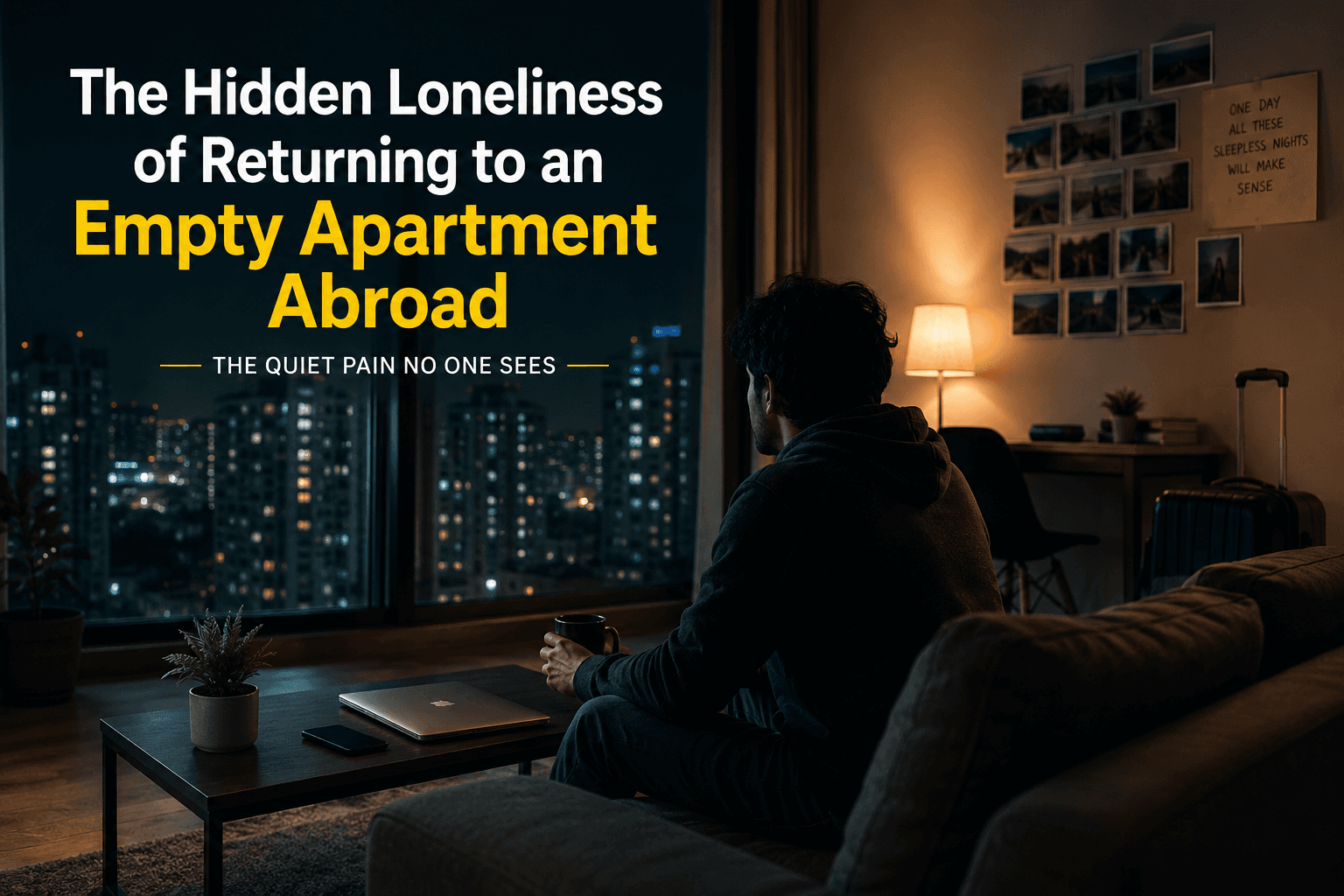
The Hidden Loneliness of Returning to an Empty Apartment Abroad
The Hidden Loneliness of Returning to an Empty Apartment Abroad
For many NRIs, the hardest part of living abroad is not always the work, weather, culture, or distance. Sometimes, the hardest part is coming back to an empty apartment after a long day.
You may have spent the whole day around people — coworkers, classmates, clients, strangers on trains, or friends at social events. But when the door closes behind you, the silence feels heavy. There is no one waiting with chai. No parent asking if you ate. No sibling making noise in the next room. No familiar family rhythm. Just a quiet space, your thoughts, and the emotional weight of being far from home.
At India Therapist, many NRIs describe this loneliness in therapy. They say, “My life looks good, but my evenings feel empty.” This experience is not weakness. It is a real emotional pain connected to isolation, emotional wellbeing, NRI life, homesickness, and the quiet cost of building a life abroad.
When Silence Feels Too Loud
An empty apartment can feel peaceful for some people. But for many NRIs, it becomes a reminder of everything they left behind. The silence after work can feel louder than the noise of the day. It can bring up feelings of loneliness, sadness, anxiety, and emotional disconnection.
In India, home is often filled with sound — family conversations, kitchen noise, phone calls, neighbors, festivals, and everyday interruptions. Abroad, life can feel more private and independent, but also more emotionally distant. You may have freedom, but you may also miss the comfort of being surrounded by people who know you deeply.
This is why emotional wellbeing matters. A comfortable apartment does not always mean emotional comfort. A good job does not always remove loneliness. A stable life does not always create belonging.
The Loneliness No One Sees
NRI loneliness is often hidden because it does not always look obvious. People back home may see your photos, your job, your travels, and your lifestyle. They may assume you are happy. They may say, “You are lucky to live abroad.”
But they may not see the lonely dinners, the quiet weekends, the missed festivals, or the nights when you scroll through family WhatsApp groups just to feel connected.
This kind of loneliness can be hard to explain. You may feel guilty for feeling lonely because your life looks successful. You may avoid telling family because you do not want them to worry. You may smile on video calls and say everything is fine, even when your heart feels heavy afterward.
A therapist in India or an Indian therapist online can help you talk about this loneliness without shame. Therapy gives you space to be honest about the emotional side of NRI life.
Why Returning Home Alone Hurts So Much
The moment you return to an empty apartment can trigger many emotions. During the day, you may stay busy enough to avoid feeling lonely. But once the noise stops, the feelings you avoided begin to surface.
You may start thinking about your parents growing older, missed family meals, relationship struggles, cultural distance, or whether the life you built abroad truly feels meaningful. This emotional heaviness can affect sleep, motivation, appetite, and mental health.
For some NRIs, the empty apartment becomes a symbol. It represents independence, but also isolation. It represents success, but also sacrifice. It represents freedom, but also distance from emotional roots.
This is why NRI counselling mental health support can be so helpful. It helps people understand that loneliness is not something to simply “get over.” It is something to understand, process, and heal.
Isolation Can Affect Mental Health
Long-term isolation can slowly affect mental health. It may begin as occasional sadness but gradually become emotional numbness, anxiety, depression, overthinking, or burnout. You may feel less interested in socializing. You may become tired of making plans. You may start feeling disconnected from yourself.
Some people cope by overworking. Others distract themselves with social media, streaming, food, or endless scrolling. These distractions may help temporarily, but they do not replace real emotional connection.
Therapy India services and online counseling can help NRIs identify unhealthy coping patterns and build healthier emotional support systems. Speaking with Indian therapists online can feel especially comforting because they understand the cultural meaning of home, family, belonging, and emotional closeness.
Why Cultural Connection Matters
Loneliness abroad is not only about being physically alone. It is also about cultural disconnection. You may have friends abroad, but they may not fully understand your memories, language, festivals, food, family pressure, or emotional background.
Sometimes, you do not want to explain everything. You simply want to be understood.
This is why working with an online Indian therapist can feel different. You do not have to explain why Diwali alone feels painful, why family guilt feels heavy, or why a quiet apartment can suddenly make you miss home deeply.
Indian therapy offers culturally sensitive support that respects both your life abroad and your emotional roots.
How Therapy Helps You Feel Less Alone
Therapy helps you understand your loneliness instead of judging it. A therapist helps you explore what the empty apartment brings up emotionally. Is it homesickness? Is it grief? Is it anxiety? Is it a lack of belonging? Is it emotional exhaustion from always appearing strong?
Once you understand the feeling, healing becomes possible.
Therapy can help you build emotional routines, create healthier connections, manage anxiety, reduce depression symptoms, strengthen self-care, and improve emotional wellbeing. It can also help you build boundaries with work so your apartment becomes a place of rest rather than only recovery from exhaustion.
At IndiaTherapist.com, NRIs can connect with therapists in India, Indian therapists, Indian therapists online, and therapist online India professionals who understand NRI life, isolation, relationship struggles, stress, and emotional healing.
Creating Emotional Warmth Abroad
An empty apartment does not have to stay emotionally empty. Healing often begins with small changes. You can create rituals that make your space feel safer and warmer. Cooking familiar food, lighting a lamp, calling a friend intentionally, journaling, joining community groups, or creating weekend routines can help rebuild emotional connection.
But if loneliness feels heavy or persistent, therapy can provide deeper support. You do not have to carry it alone.
Relationship counselling India can also help if loneliness is affecting your marriage or partnership abroad. Many couples struggle silently when life overseas becomes emotionally demanding. Therapy gives them tools to reconnect, communicate, and support each other better.
You Deserve Connection, Not Just Survival
Living abroad requires courage. Building a life away from home takes strength. But strength should not mean silent suffering.
You can be grateful for your life abroad and still feel lonely. You can be independent and still need emotional support. You can have success and still miss belonging.
At India Therapist, we believe mental health support should feel safe, familiar, and culturally understanding. Whether you are looking for therapy in India, india therapy, best therapists in India, or indian online therapists, help is available.
Because the apartment may be empty when you return.
But your life does not have to feel emotionally empty.
Ready to talk to someone who understands?
Connect with an Indian therapist who speaks your language and understands your cultural context.