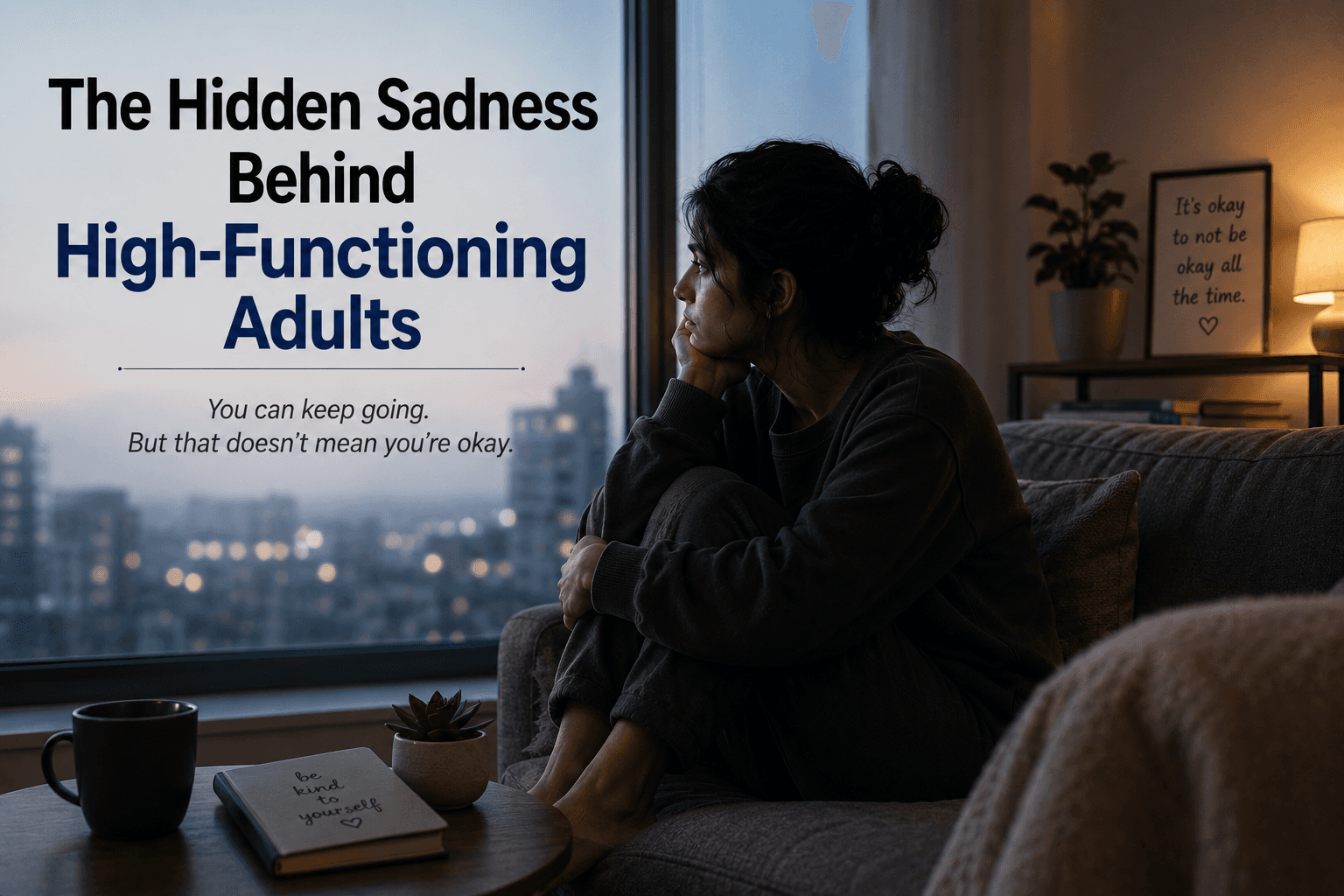
The Hidden Sadness Behind High-Functioning Adults
The Hidden Sadness Behind High-Functioning Adults
Some people look like they are doing perfectly well. They wake up on time, go to work, reply to messages, support their family, meet deadlines, and keep moving through life with a calm face. They appear responsible, capable, and emotionally steady. People often describe them as “strong,” “mature,” or “someone who has it all together.”
But sometimes, behind that functioning outer life, there is a deep and quiet sadness.
At India Therapist, we often hear from people who say, “I’m managing everything, but I don’t feel okay inside.” They are not falling apart in public. They are not always visibly struggling. In fact, many people around them may have no idea they are carrying depression, emotional exhaustion, or a constant heaviness inside. This is the hidden sadness behind high-functioning adults.
What It Means to Be High-Functioning
A high-functioning adult is someone who continues to manage daily responsibilities even while struggling emotionally. They may still go to work, care for others, attend family events, and appear “normal” on the outside. Their life may look stable. They may even be successful.
But functioning is not the same as feeling well.
Many adults learn to keep going even when they are emotionally drained. They may not allow themselves to slow down because they feel needed, responsible, or afraid of what might happen if they stop. Over time, they become skilled at hiding pain behind routine.
This is why depression does not always look the way people expect. It is not always visible. Sometimes it hides behind productivity, politeness, and a smile.
Why So Many Adults Learn to Hide Their Sadness
Many people do not hide sadness because they are pretending. They hide it because they were never taught that their emotions were safe to express.
In many Indian homes, people grow up hearing things like, “Be strong,” “Don’t think too much,” “Everyone has problems,” or “Just focus on your work.” These messages may be well meant, but they often teach a person to suppress emotions rather than understand them.
As adults, this can turn into emotional masking. A person may keep smiling, keep working, and keep acting fine because they do not want to be seen as weak, dramatic, or burdensome. They may also fear worrying their parents, partner, or children.
A therapist in India or an Indian therapist online often helps clients see that this habit of masking was once a form of protection. But protection can become painful when it stops you from being honest about how you feel.
The Difference Between Being Busy and Being Okay
Many high-functioning adults stay busy because busyness protects them from feeling too much. If the day is full of work, family duties, chores, and distractions, there is less space to sit with sadness.
But at night, when the house becomes quiet, the heaviness often returns.
Some people feel a deep emptiness when the day ends. Others notice they are always tired, irritated, unmotivated, or disconnected from joy. They may continue functioning, but inside they feel numb. Things they once enjoyed no longer feel meaningful. They may laugh with others and still feel strangely absent within themselves.
This is where therapy in India can help. Therapy creates a space where you do not have to keep functioning for everyone else. You can stop performing wellness and start understanding what is really happening inside.
How Depression Can Hide in Plain Sight
Depression is often misunderstood. Many people imagine it only as visible crying, staying in bed, or being unable to function. But depression can also be quiet. It can live inside adults who never miss work, who care for their families, and who appear highly capable.
Hidden depression may show up as constant emotional fatigue, low mood, emptiness, hopelessness, irritability, sleep problems, self-criticism, or a loss of interest in life. Some adults feel like they are just “going through the motions.” Others feel disconnected from themselves.
Because they are still functioning, they often tell themselves their pain is not serious enough to deserve help. They may think, “Other people have it worse,” or “At least I’m managing.” But emotional pain does not become less real just because you are still performing daily responsibilities.
At IndiaTherapist.com, we remind people that you do not need to wait until everything collapses before reaching out for support.
Why High-Functioning Adults Often Feel Alone
One of the hardest parts of hidden sadness is loneliness. When everyone sees you as the strong one, they may stop checking if you are okay. They assume you can handle everything. They rely on you. They admire your strength. But they may not see your pain.
This creates a painful emotional gap. You may be surrounded by people, yet feel unseen. You may support others while secretly wishing someone would ask how you are really doing. You may keep saying “I’m fine” because explaining feels too exhausting.
For NRIs, this loneliness can feel even deeper. Many are balancing work abroad, family expectations, homesickness, and emotional isolation. They may look successful from the outside, but inside they may feel disconnected and tired. This is why NRI counselling mental health support is so valuable. An online Indian therapist understands the cultural pressure to stay strong while carrying emotional weight in silence.
The Cost of Always Holding It Together
When a person keeps masking sadness for too long, it often begins to affect every part of life. Relationships may become more distant. Work may start feeling empty. The body may feel constantly tired. Anxiety may increase. Small tasks may feel heavier than before.
Sometimes, people start feeling guilty because they have a “good life” but still feel sad. They may have a career, a family, financial stability, or social respect — and still feel emotionally lost. This guilt can make them hide even more.
But sadness is not always caused by something visible. Sometimes it grows from years of emotional suppression, unresolved pain, burnout, people-pleasing, loneliness, or never feeling safe enough to be fully honest.
Working with an Indian therapist, therapists in India, or Indian therapists online can help uncover what the sadness is really connected to.
How Therapy Helps
Therapy helps high-functioning adults slow down and listen to themselves. It offers something many people have not had for a long time: a space where they do not have to be the strong one.
A therapist helps you explore the emotions behind the functioning. You may begin to understand your sadness, your self-pressure, your old coping patterns, and your emotional needs. You may also learn that being emotionally well is not the same as simply keeping life running.
Through india therapy, therapy India, and support from best therapists in India, people can learn to name what they feel, ask for help, challenge self-criticism, and reconnect with parts of themselves they have ignored for years.
Therapy also helps reduce the shame around needing support. You do not need a dramatic breakdown to benefit from counseling. If you feel persistently low, emotionally tired, or disconnected from life, that is reason enough to talk to someone.
You Do Not Have to Keep Hiding
If you are someone who keeps functioning while quietly carrying sadness, please know this: your pain is valid. You are not weak because you are struggling internally. You are not “too sensitive.” And you do not have to wait until things get worse to seek help.
At India Therapist, we believe healing begins when you stop judging yourself for not feeling okay. Whether you connect with a therapist in India, an india therapist online, or an online Indian therapist, what matters is giving your inner world the attention it deserves.
Because being high-functioning does not mean you are emotionally fine.
And being strong does not mean you have to suffer in silence.
Ready to talk to someone who understands?
Connect with an Indian therapist who speaks your language and understands your cultural context.