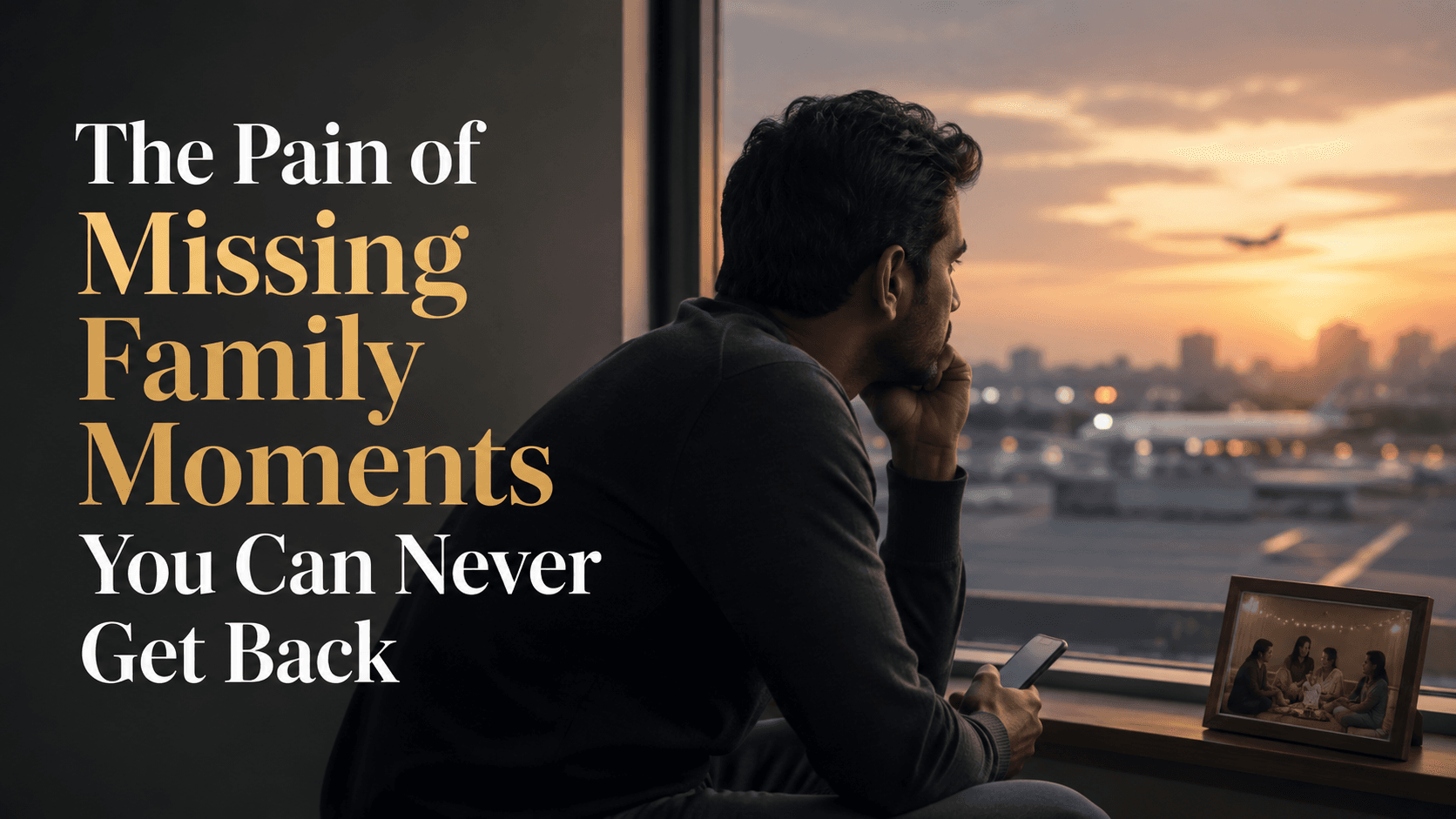
The Pain of Missing Family Moments You Can Never Get Back
The Pain of Missing Family Moments You Can Never Get Back
Living abroad often comes with opportunity, independence, and the hope of building a better future. For many NRIs, it also comes with a quiet emotional cost that few people talk about openly. One of the deepest pains is missing family moments you can never get back.
It may be a parent’s birthday you attended only through a video call. A sibling’s wedding you experienced from a distance. A grandparent’s final days you could not be present for. A child in the family growing up faster than expected. A festival that once felt full of warmth now reduced to a short call across time zones. These moments may pass in the outside world, but inside, they often stay alive as grief, regret, and emotional heaviness.
At India Therapist, many NRIs speak about this specific pain. They say they can handle the work stress, the cultural adjustment, and even the loneliness at times. But what breaks them quietly is the feeling of not being there when family life keeps moving without them. Therapy helps people understand that this pain is real, valid, and deserving of emotional healing.
Distance Changes the Meaning of Family Moments
When you live close to family, everyday moments can feel ordinary. A birthday dinner, a temple visit, an evening conversation, a hospital visit, a casual Sunday lunch — these things seem small when they are available to you. But once you move abroad, you begin to understand how meaningful they really were.
For many NRIs, distance changes the emotional value of time. You begin to realize that it is not only the big milestones you miss. It is the ordinary closeness that hurts most. It is not being there when your parents are silently growing older. It is not noticing how fast your nieces and nephews are changing. It is not being able to sit next to someone you love when they need comfort.
This creates a unique kind of grief. It is not only grief for what happened. It is grief for what you could not be part of.
A therapist in India or an Indian therapist online can help NRIs process this kind of pain with compassion, rather than forcing themselves to ignore it.
Why This Pain Feels So Deep
Missing family moments hurts because family is tied to identity, belonging, love, and emotional safety. For many Indians, family is not just a part of life — it is the emotional center of life. Even when relationships are complex, family often remains deeply important.
So when an NRI misses a major family event or even a quiet emotional moment, the pain often goes beyond sadness. It can bring guilt, regret, helplessness, and self-blame. You may think:
“I should have been there.”
“What if this never happens again?”
“What kind of son or daughter am I?”
“Was my career worth missing this?”
“What if I don’t get another chance?”
These thoughts can become emotionally overwhelming. They may not always be said out loud, but they live quietly in the mind. This is why therapy in India is not only about anxiety or depression. It is also about understanding emotional pain that comes from distance, longing, and family separation.
The Guilt That NRIs Carry Silently
Many NRIs feel guilty for building a life abroad while their families continue life without them in India. They may feel guilty for missing illnesses, ceremonies, losses, family conflicts, and emotional turning points. Even if they are doing well professionally, there can be a painful feeling that success came with an emotional price.
This guilt becomes heavier when parents grow older. A simple phone call can trigger sadness when you notice your mother sounding more tired or your father repeating the same worries. You may hear about a family event after it happened, or watch it through photos, knowing you were not really there.
Sometimes family does not mean to create guilt, but comments like “It would have been nice if you were here,” or “You missed everything,” can stay in the heart for a long time.
NRI counselling mental health support helps individuals explore these emotions without shame. Therapy helps you understand that guilt often comes from love, not failure. You are not uncaring because you are far away. You are human, and distance can be painful.
Grief Is Not Always Obvious
Many people do not recognize this pain as grief, but it often is. Grief is not only about death. Grief can be about absence, lost time, missed experiences, emotional distance, and life moving on without you.
NRIs may grieve the missed family wedding, the parent’s surgery they could not attend, the grandparent they did not properly say goodbye to, the child’s first milestones in the extended family, or the last festival that felt truly whole.
This grief may not always have a clear ritual or public recognition. No one may say, “You are grieving.” But emotionally, that is often what is happening.
At IndiaTherapist.com, many clients feel relieved when they realize that what they are carrying has a name. They are not being dramatic. They are grieving missed moments, lost closeness, and the emotional cost of distance.
How Regret Can Stay in the Mind
Regret often becomes part of this pain. You may replay decisions and wonder whether you should have traveled sooner, called more often, taken leave from work, or chosen differently in life. The mind keeps revisiting the past, trying to make peace with something that cannot be changed.
This kind of regret can disturb emotional wellbeing. It can lead to anxiety, sadness, overthinking, and even emotional numbness. Some people become more withdrawn. Others become extra busy because slowing down brings back the hurt.
Working with an Indian therapist, online Indian therapist, or therapist online India professional can help people process regret in a healthier way. Therapy does not erase the pain, but it helps transform regret into understanding, self-compassion, and healing.
Why Video Calls Are Not Always Enough
Technology helps NRIs stay in touch, but it does not replace presence. A video call can keep a relationship alive, but it cannot fully hold the emotional weight of being physically absent during meaningful moments.
Watching a celebration through a screen or hearing about a family crisis from thousands of miles away can leave a person feeling powerless. Sometimes, what hurts most is not only what happened, but the fact that you could not hug, sit quietly, help practically, or simply be there.
This feeling of distance can create emotional isolation. Even when you speak to family often, part of you may still feel like an outsider to your own family’s daily life. This is a common emotional experience for NRIs, and it deserves care.
How Therapy Helps With Emotional Healing
Therapy helps by giving space to feelings that are often pushed aside. Many NRIs tell themselves they should just be grateful, stay strong, or not think too much. But unprocessed grief does not disappear. It stays inside and often grows heavier.
A therapist helps you explore the sadness, guilt, regret, loneliness, and helplessness connected to missed family moments. Therapy also helps you challenge harsh self-blame. You begin to understand that being far away does not mean you love your family any less.
Through Indian therapy, therapy India, and support from therapists in India, people learn to hold pain with greater self-compassion. They also learn ways to stay emotionally connected to family while caring for their own mental health.
For some, healing includes grieving what cannot be changed. For others, it includes creating new ways to connect more intentionally. Therapy helps with both.
Healing Does Not Mean Forgetting
Emotional healing does not mean the missed moment stops mattering. It means the pain becomes less punishing. You begin to remember with love rather than only regret. You learn that it is possible to miss something deeply and still move forward without living in constant self-blame.
You may never get some moments back. That is the truth, and it hurts. But that does not mean you are condemned to carry only pain. You can still create meaningful connection. You can still be emotionally present in the relationships that matter. You can still love your family deeply, even across borders.
At India Therapist, we believe NRIs deserve therapy that understands this emotional reality. Whether you are dealing with grief, distance, regret, loneliness, or emotional isolation, support is available.
Because sometimes the hardest part of living abroad is not the work, the visa, or the adjustment.
It is the moments with family that time takes away — and the heart keeps holding on to.
Ready to talk to someone who understands?
Connect with an Indian therapist who speaks your language and understands your cultural context.