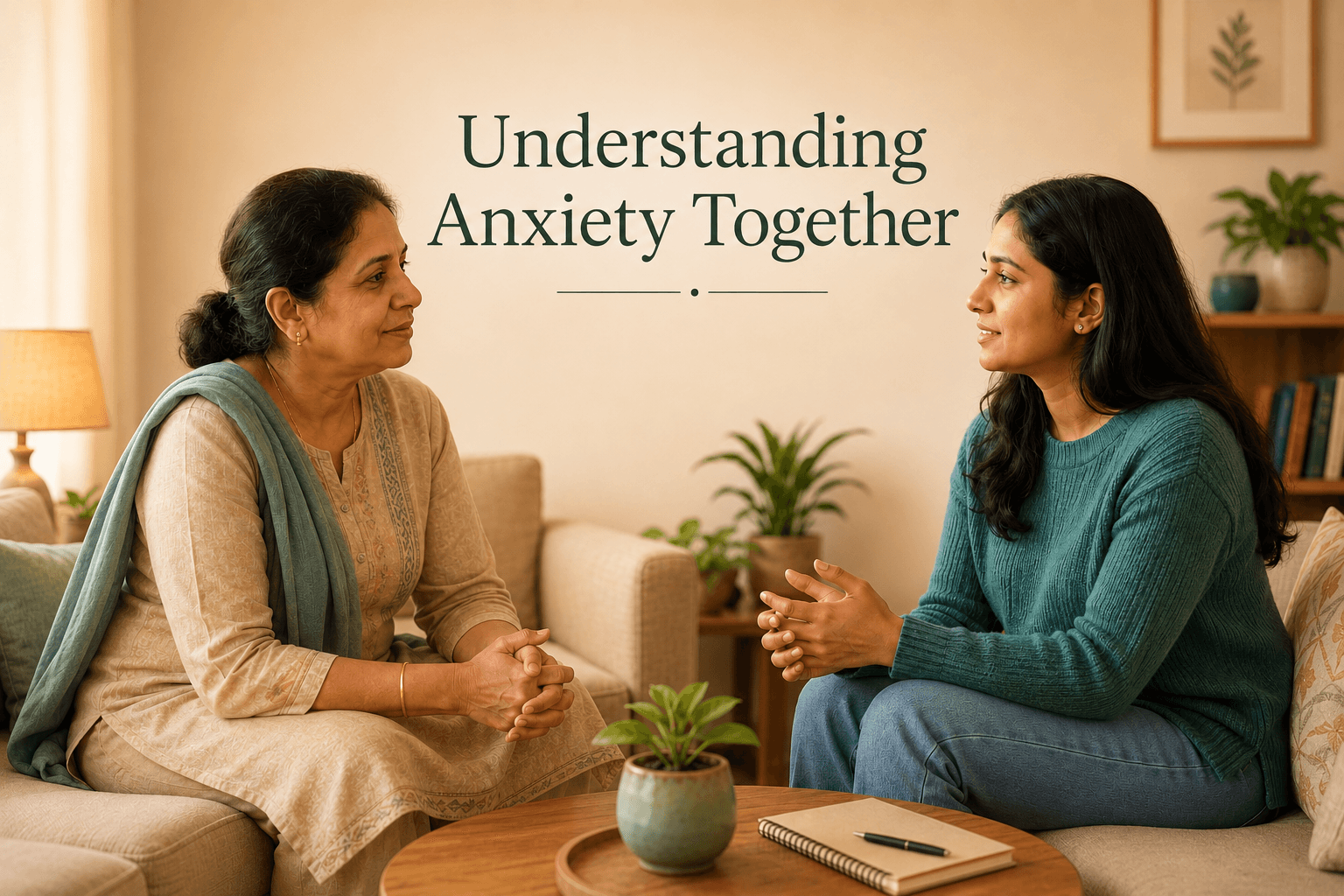
Why Indian Parents Struggle to Understand Anxiety — And How Therapy Bridges the Gap
Why Indian Parents Struggle to Understand Anxiety — And How Therapy Bridges the Gap
Anxiety is one of the most common mental health challenges today, but in many Indian families, it is still misunderstood. A child may say, “I feel anxious,” and the parent may respond with, “Don’t overthink,” “Be strong,” “Everyone has problems,” or “You have everything, why are you stressed?”
Most Indian parents do not say this because they do not care. In fact, many parents care deeply. But they often come from a generation where emotional struggles were not openly discussed. For them, survival, responsibility, education, marriage, family reputation, and financial stability were often treated as more important than emotional wellbeing.
At India Therapist, many clients share that their parents love them but do not understand their anxiety. This creates a painful gap. The child feels unseen, and the parent feels confused or helpless. Therapy helps bridge this gap by creating awareness, emotional language, and healthier communication between generations.
Why Indian Parents Often Misunderstand Anxiety
Many Indian parents grew up in environments where mental health was not openly spoken about. Emotional pain was often handled silently. People were expected to adjust, tolerate, pray, work harder, or move on.
Because of this, anxiety may be seen as weakness, laziness, fear, or lack of discipline. Some parents may believe that if their child has food, education, shelter, and family support, they should be happy. But anxiety does not work that way.
Anxiety is not simply “thinking too much.” It can affect the mind, body, sleep, relationships, confidence, and daily functioning. A person with anxiety may experience racing thoughts, fear, restlessness, overthinking, panic, irritability, stomach discomfort, headaches, fatigue, or difficulty focusing.
When parents do not understand this, they may accidentally dismiss the child’s pain.
The Generation Gap in Emotional Language
One major reason Indian parents struggle to understand anxiety is the lack of emotional vocabulary.
Many parents were never taught to say:
“I feel overwhelmed.”
“I need emotional support.”
“I feel unsafe.”
“I am anxious.”
“I need help.”
Instead, emotions were often expressed through anger, silence, control, advice, or worry. A parent may show care by asking about marks, salary, food, marriage, or career, but may not know how to ask, “How are you feeling emotionally?”
This creates misunderstanding. The younger generation may want emotional validation, while parents may offer practical solutions. Both sides may care, but they speak different emotional languages.
Therapy helps translate these emotional languages.
Why Parents Say “Be Strong”
When Indian parents say “be strong,” they often mean, “I want you to survive this.” But to someone experiencing anxiety, it may sound like, “Your emotions are not valid.”
Many parents learned strength as endurance. They may have gone through financial struggles, family responsibilities, social pressure, or personal pain without support. So when their child expresses anxiety, they may think pushing them harder will help.
But anxiety does not heal through pressure. It heals through understanding, safety, support, and healthy coping tools.
Being strong does not mean hiding emotions. Real strength includes asking for help, understanding your mind, and learning how to manage stress in a healthier way.
How Family Pressure Increases Anxiety
In Indian families, anxiety is often connected to expectations. Children may feel pressure around studies, career, marriage, money, family reputation, and comparison with others.
Common anxious thoughts may include:
“What if I disappoint my parents?”
“What if I fail?”
“What will relatives say?”
“Am I falling behind?”
“Will my family accept my choices?”
“Can I say no without hurting them?”
Even adult children may feel trapped between personal happiness and family expectations. This emotional pressure can increase anxiety, guilt, stress, and self-doubt.
For NRIs, this can become even more complex. Living abroad may bring loneliness, cultural adjustment, career pressure, and guilt about being away from family. NRI counselling mental health support can help individuals process these emotions with cultural sensitivity.
The Problem With Dismissing Anxiety
When anxiety is dismissed, people may stop sharing. They may begin hiding their struggles because they fear judgment or misunderstanding.
They may say “I’m fine” while silently dealing with panic, overthinking, emotional exhaustion, or depression. Over time, this silence can damage mental health and relationships.
Dismissing anxiety can make a person feel:
Alone
Weak
Ashamed
Misunderstood
Guilty for struggling
Afraid to ask for help
This is why therapy awareness is so important. Anxiety is not a character flaw. It is a mental health concern that deserves care and support.
How Therapy Bridges the Gap
Therapy helps both individuals and families understand anxiety better. A therapist provides a safe space where emotions can be explored without blame or judgment.
For the person experiencing anxiety, therapy helps with:
Understanding anxiety triggers
Managing overthinking
Building coping skills
Improving emotional awareness
Setting boundaries
Reducing guilt
Communicating needs clearly
For families, therapy can help create better understanding. Parents can learn that anxiety is not drama, weakness, or disrespect. It is a real emotional experience that needs support.
A therapist in India or Indian therapist online can be especially helpful because they understand Indian family dynamics, cultural expectations, parent-child relationships, marriage pressure, career pressure, and emotional stigma.
How to Talk to Indian Parents About Anxiety
Talking to parents about anxiety can feel difficult, especially if they do not understand mental health. Start slowly and clearly.
Instead of saying only, “I have anxiety,” you can explain how it affects your daily life.
For example:
“I know you want me to be strong, but right now I need support, not pressure.”
“When I say I feel anxious, I mean my body and mind feel constantly unsafe.”
“I am not blaming you. I am trying to explain what I am going through.”
“Therapy can help me manage this better.”
“I need you to listen first before giving advice.”
The goal is not to win an argument. The goal is to create understanding.
Why Culturally Sensitive Therapy Matters
Mental health support becomes more effective when the therapist understands cultural context. Indian families have unique emotional structures involving respect, duty, sacrifice, reputation, marriage expectations, and interdependence.
A culturally sensitive therapist understands that healing is not just individual. It often involves family beliefs, generational patterns, guilt, boundaries, and communication.
At IndiaTherapist.com, individuals and NRIs can connect with trusted Indian therapists online, therapists in India, and mental health professionals who understand anxiety, family pressure, emotional wellbeing, and Indian cultural dynamics.
Parents Can Learn Too
It is never too late for parents to understand mental health. Many parents soften when they realize anxiety is not an excuse but a real struggle. Sometimes, they need simple explanations, patience, and guidance.
Parents do not have to become perfect. Even small changes can help:
Listening without interrupting
Avoiding comparison
Asking “How can I support you?”
Not dismissing emotions
Encouraging therapy
Learning about anxiety
Offering comfort instead of criticism
A child does not need perfect parents. They need emotionally willing parents.
Healing the Gap Between Love and Understanding
Many Indian parents love their children deeply. But love without emotional understanding can still feel lonely. Therapy helps bridge the gap between care and communication.
Anxiety becomes easier to manage when families stop treating it as weakness and start seeing it as something that can be understood, supported, and healed.
At India Therapist, we believe mental health conversations can bring families closer. With awareness, therapy, and compassion, Indian parents and children can learn to understand each other better.
📱 WhatsApp: +1 (425) 442-4167
💬 Message: “Hi, I’d like to connect with a therapist.”
Because anxiety does not need judgment.
It needs understanding.
Ready to talk to someone who understands?
Connect with an Indian therapist who speaks your language and understands your cultural context.