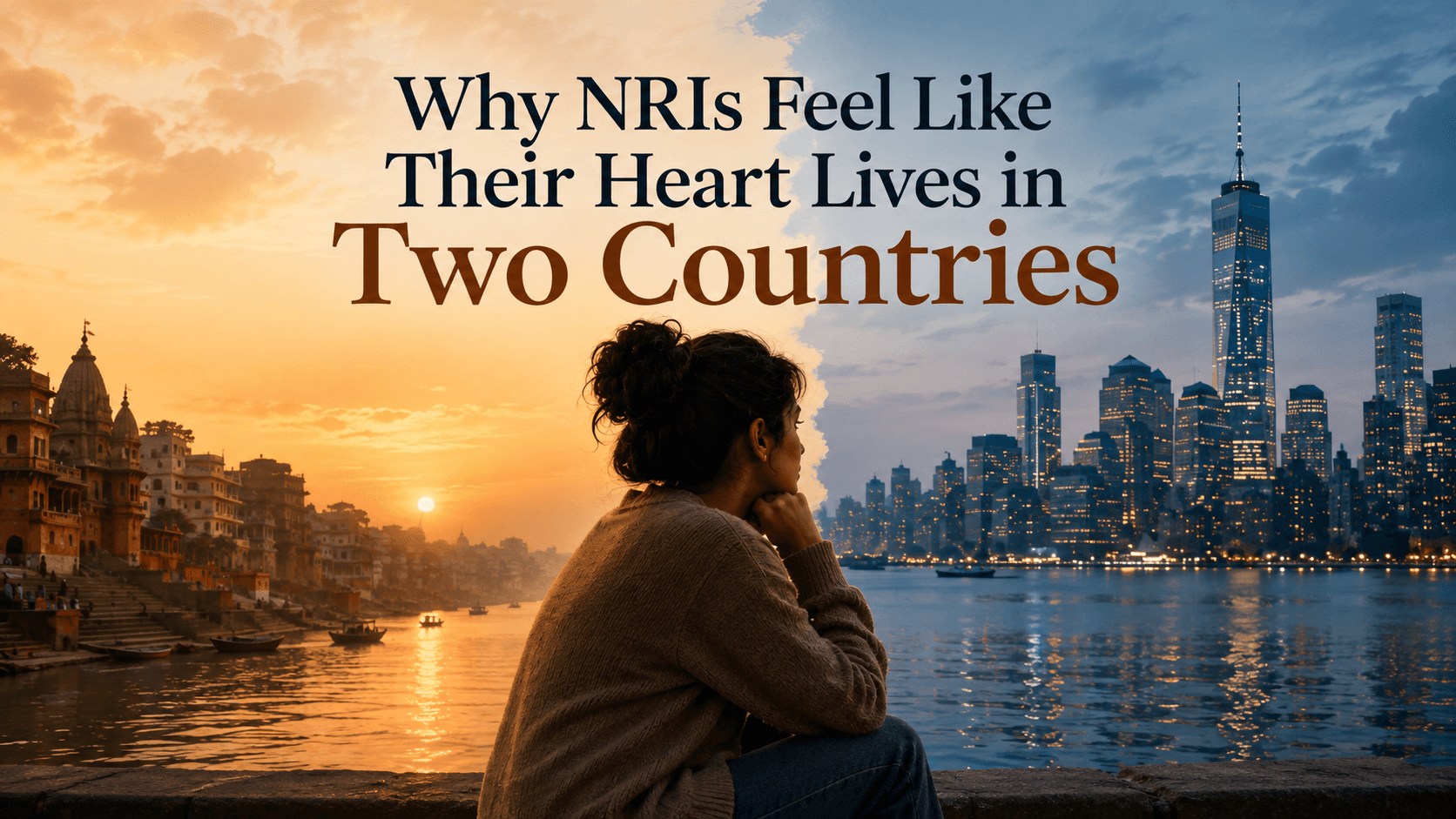
Why NRIs Feel Like Their Heart Lives in Two Countries
Why NRIs Feel Like Their Heart Lives in Two Countries
For many NRIs, life abroad is not just a change of location. It is a change of identity. You build a new routine, adjust to a new culture, learn new systems, make new friends, and slowly create a life in another country. But even after years abroad, one part of your heart may still remain deeply connected to India.
This is why many NRIs feel like their heart lives in two countries.
One part of you belongs to the life you are building abroad. The other part still belongs to your family, language, food, festivals, childhood memories, and the emotional warmth of home. This can create a quiet emotional conflict. You may feel grateful for your opportunities abroad, but still miss India deeply. You may enjoy independence, but still feel guilty for being far from family. You may feel proud of your growth, but still wonder where you truly belong.
At India Therapist, many NRIs come to therapy saying, “I feel like I am living in one country, but emotionally I am still somewhere else.” This feeling is not weakness. It is a real part of NRI mental health, connected to identity, homesickness, belonging, emotional conflict, and the pain of living between two worlds.
The Emotional Split of NRI Life
NRI life often creates an emotional split. Your body may be abroad, but your thoughts may often return to India. You may work in a foreign office, but your mind remembers family conversations. You may celebrate success abroad, but your heart aches when you miss a festival, wedding, birthday, or ordinary family dinner back home.
This emotional split can become tiring because you are constantly moving between two worlds. At work, you adapt to one culture. With family, you return to another emotional world. With friends abroad, you may explain parts of yourself. With family in India, you may hide parts of your life because they may not fully understand.
A therapist in India or an Indian therapist online can help NRIs understand this emotional conflict with compassion. Therapy helps you realize that feeling divided does not mean you are confused. It means you are carrying two meaningful worlds inside you.
Homesickness Is More Than Missing Home
Homesickness is often misunderstood as simply missing a place. But for NRIs, homesickness is usually much deeper. It is missing a feeling. It is missing emotional safety, familiar language, family noise, Indian food, festivals, cultural comfort, and the ease of being understood without explaining yourself.
You may miss the way home felt during small moments. Morning tea with family. Random conversations with parents. The sound of relatives visiting. Street food. Temple bells. Local languages. Family functions. Festivals that felt alive. These memories are not small. They are part of your emotional identity.
Through therapy India and therapy in India, many NRIs learn that homesickness is not childish or dramatic. It is a normal emotional response to distance, change, and separation from what once made you feel rooted.
The Search for Belonging
Belonging becomes complicated when you live abroad. In your new country, you may slowly build comfort, friendships, and independence. But you may still feel culturally different. You may not fully connect with the humor, social habits, emotional style, or lifestyle around you.
When you visit India, you may expect to feel completely at home. But sometimes, even India feels different. People may say, “You have changed.” Your old friends may have moved forward in their own lives. Family routines may no longer include you in the same way. The country you left behind may have changed, and so have you.
This creates a painful question: “Where do I truly belong?”
An online Indian therapist can help NRIs explore this question gently. Therapy helps you understand that belonging does not always have to be tied to one place. Sometimes, healing means learning how to belong to yourself first.
The Guilt of Being Far Away
Many NRIs carry guilt alongside homesickness. They feel guilty for missing family events, not being physically present for parents, not calling enough, or building a life away from the people they love.
This guilt can become especially heavy when parents grow older. A simple video call can suddenly make you emotional. You may notice changes in their face, voice, health, or energy. You may wonder whether your life abroad is worth the distance.
This is one of the most common themes in NRI counselling mental health. Therapy helps NRIs separate love from guilt. You can love your family deeply and still live your own life. You can feel sad about distance without blaming yourself for everything. You can stay connected without destroying your emotional wellbeing.
Identity Conflict Between Two Cultures
Living between two countries often means living between two versions of yourself. Abroad, you may become more independent, private, direct, or self-aware. In India, older roles may return. You may become the son, daughter, sibling, or family member everyone remembers from years ago.
This can create identity conflict. You may feel like you are adapting abroad while still being emotionally pulled by Indian expectations. You may feel pressure around marriage, career, money, family duty, lifestyle, and cultural values.
This does not mean one identity is right and the other is wrong. It means you are evolving. Indian therapy helps NRIs integrate both parts of themselves — the person shaped by India and the person growing abroad.
At IndiaTherapist.com, many clients work with Indian therapists online, therapists in India, and best therapists in India to process identity confusion, emotional conflict, family pressure, anxiety, and belonging.
When Emotional Conflict Becomes Exhausting
Feeling connected to two countries can be beautiful, but it can also become exhausting. You may feel emotionally stretched. When you are abroad, you miss home. When you are in India, you miss your independence. When you choose yourself, you feel guilty. When you follow expectations, you feel trapped.
This emotional conflict can affect mental health. It may show up as anxiety, depression, loneliness, overthinking, emotional numbness, sleep problems, or burnout. You may feel like you are never fully present anywhere because part of you is always somewhere else.
A therapist online India professional can help you understand this emotional tiredness. Therapy gives you space to stop pretending everything is simple and start processing the complexity honestly.
How Therapy Helps NRIs Feel Whole Again
Therapy helps NRIs make sense of the emotional tension between identity, homesickness, belonging, and family duty. It does not force you to choose one country over another. It helps you build a more integrated sense of self.
A therapist may help you ask: What does home mean to me now? What parts of India do I want to carry with me? What parts of my life abroad feel meaningful? What guilt am I carrying unnecessarily? How can I build emotional safety where I am?
These questions help NRIs move from confusion to clarity.
Whether you work with an Indian therapist, Indian therapists online, Indian online therapists, or a therapist in India, therapy can support emotional healing in a culturally sensitive way. It helps you create belonging not only outside, but within yourself.
You Can Belong to More Than One Place
Your heart living in two countries does not mean you are lost. It means you have loved deeply, moved bravely, and grown across worlds.
You can miss India and still build a meaningful life abroad. You can love your family and still choose independence. You can carry your roots and still grow new wings. You can belong to more than one place without betraying either.
At India Therapist, we believe NRIs deserve mental health support that understands this emotional complexity. If you are struggling with homesickness, identity conflict, loneliness, anxiety, emotional guilt, or the feeling of not fully belonging anywhere, therapy can help.
Because your heart may live in two countries.
But healing can help you feel whole within yourself.
Ready to talk to someone who understands?
Connect with an Indian therapist who speaks your language and understands your cultural context.